
Gallery Coffee Origin Trip: Villatoros in Guatemala (Part II)
This origin trip to the Villatoro family coffee farms in Guatemala gave us a firsthand look at where our coffee comes from, the people behind it, and the relationships that shape how we source coffee at Gallery.
In this second installment of our three-part blog series, we’re heading to our first coffee farm in Guatemala.
FINCA PUNTA DEL CERRO
After a three-hour drive, winding up one of the steep mountain passes of Huehuetenango, we arrived at a farm whose name translates to “farm at the top of the hill” — and it absolutely lives up to it. A total stunner.
We rode up with Rodin’s father, Aurelio Villatoro, the patriarch of the Villatoro family, whose steady presence and gracious demeanor are deeply respected by family, workers, and neighboring community members, alike. A proud, yet remarkably humble farmer and savvy businessman, Aurelio’s vision and hard work has positioned the Villatoros as some of the most successful coffee farmers in Guatemala.
His plans for Punta Del Cerro were no less remarkable. Just last year, the farm’s main house was little more than cement and framing.
The farm at the top of the hill was originally purchased through bartered coffee, acre by acre, in the early 1950s. Eventually passed down to Aurelio, the property has seen some large additions over the past few years, including new housing for the family and workers to stay, wet mill, drying beds, and green coffee warehouse.
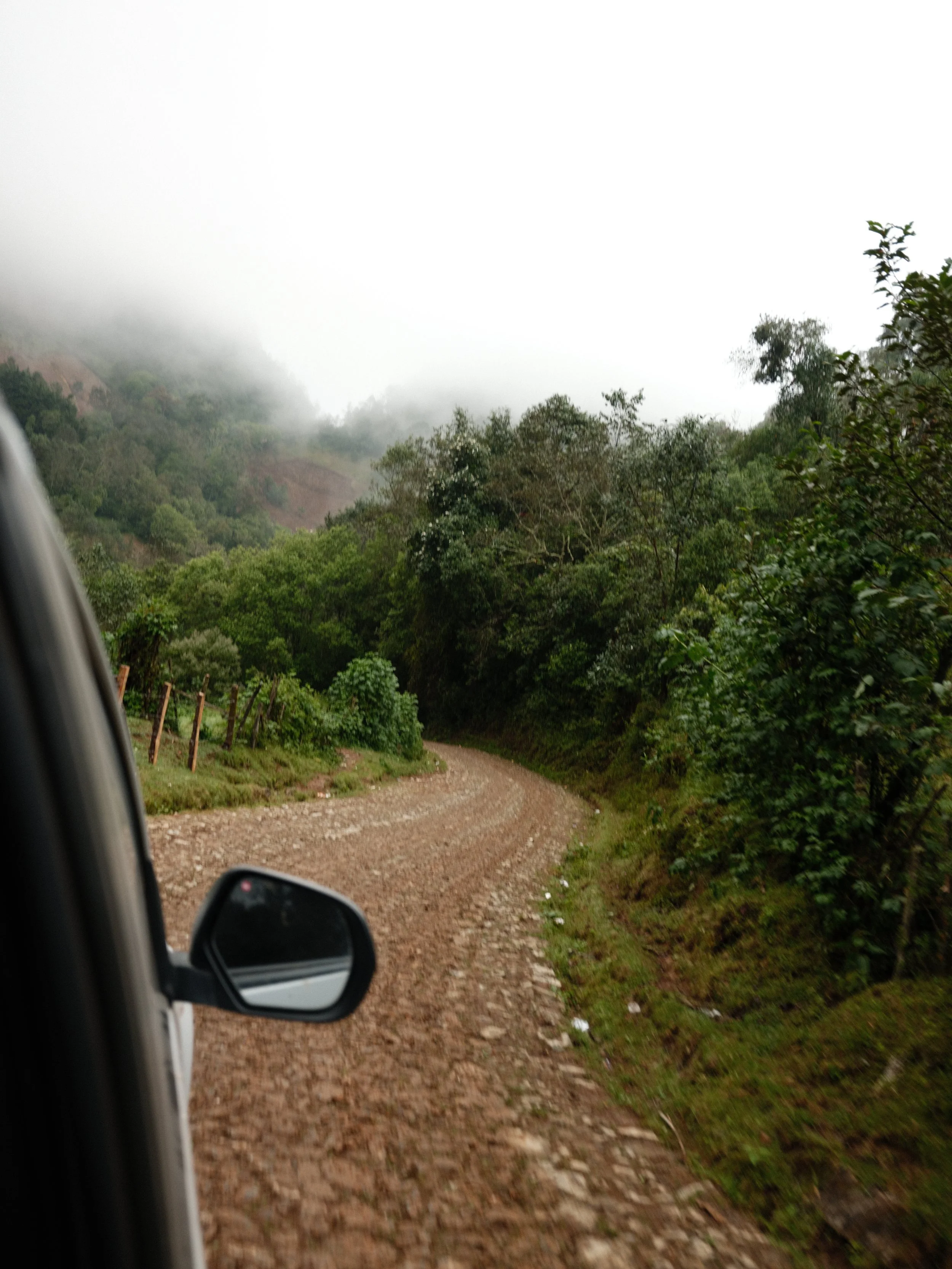
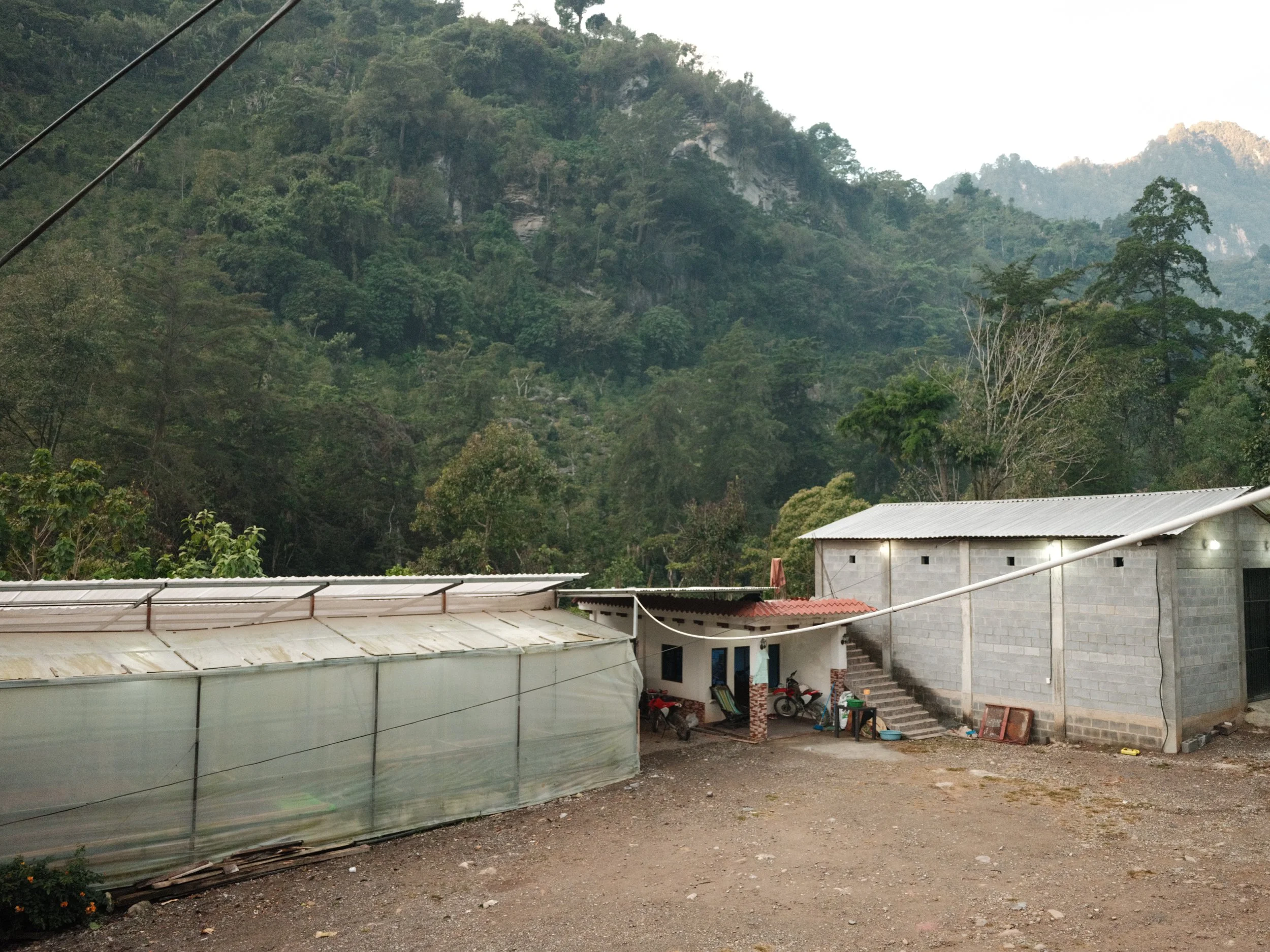
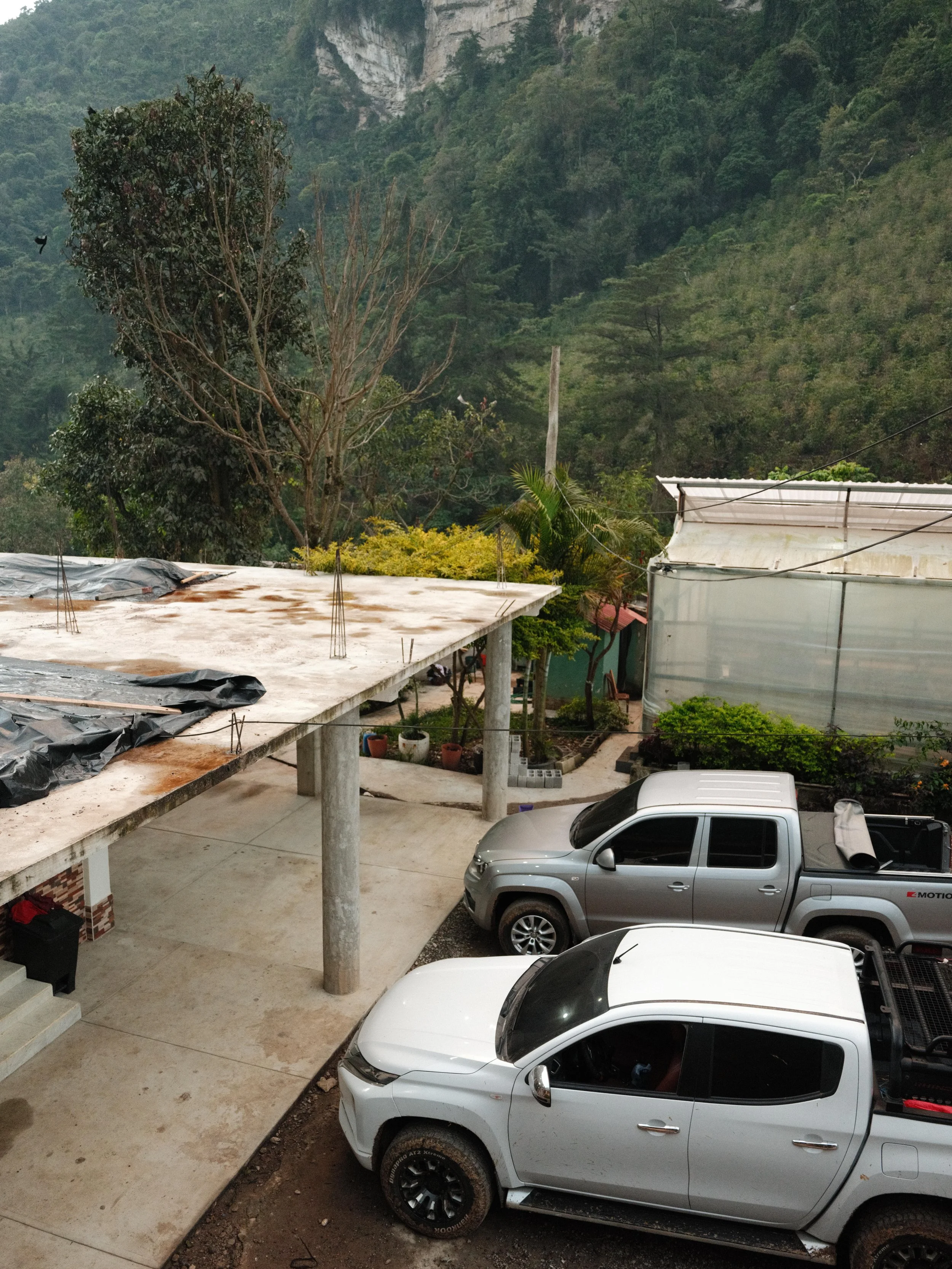
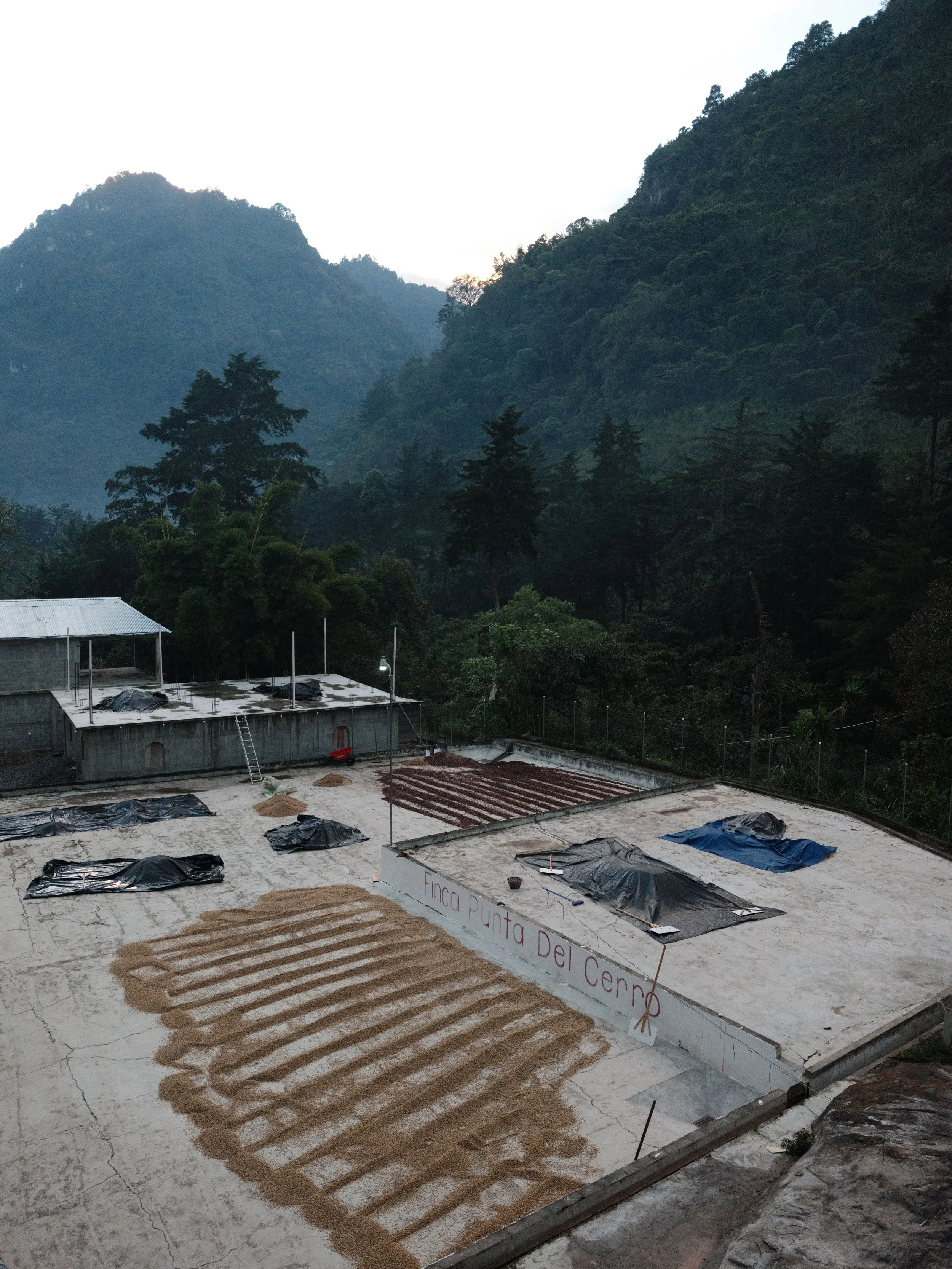
We pulled into the farm at dusk and were greeted by family members staying on the property. But the very first person to welcome us? None other than the “unicorn coffee” purveyor himself, Aler Villatoro.
Talk about a full-circle moment.
If you remember from Part I of our Guatemala blog series, Aler’s coffee was the very first Villatoro lot Ben ever tried — the one that instantly hooked him and quietly set this whole journey in motion. Meeting the person behind the cup that started it all felt surreal in the best way.
COFFEE EVERYWHERE
Ben was up at dawn the next morning to catch sunrise photos from the roof, but workers were already starting their day’s picking at the top of the mountainside. The climb to the top takes nearly an hour and begins well before sunrise, giving workers every possible minute of daylight during these darker winter days.
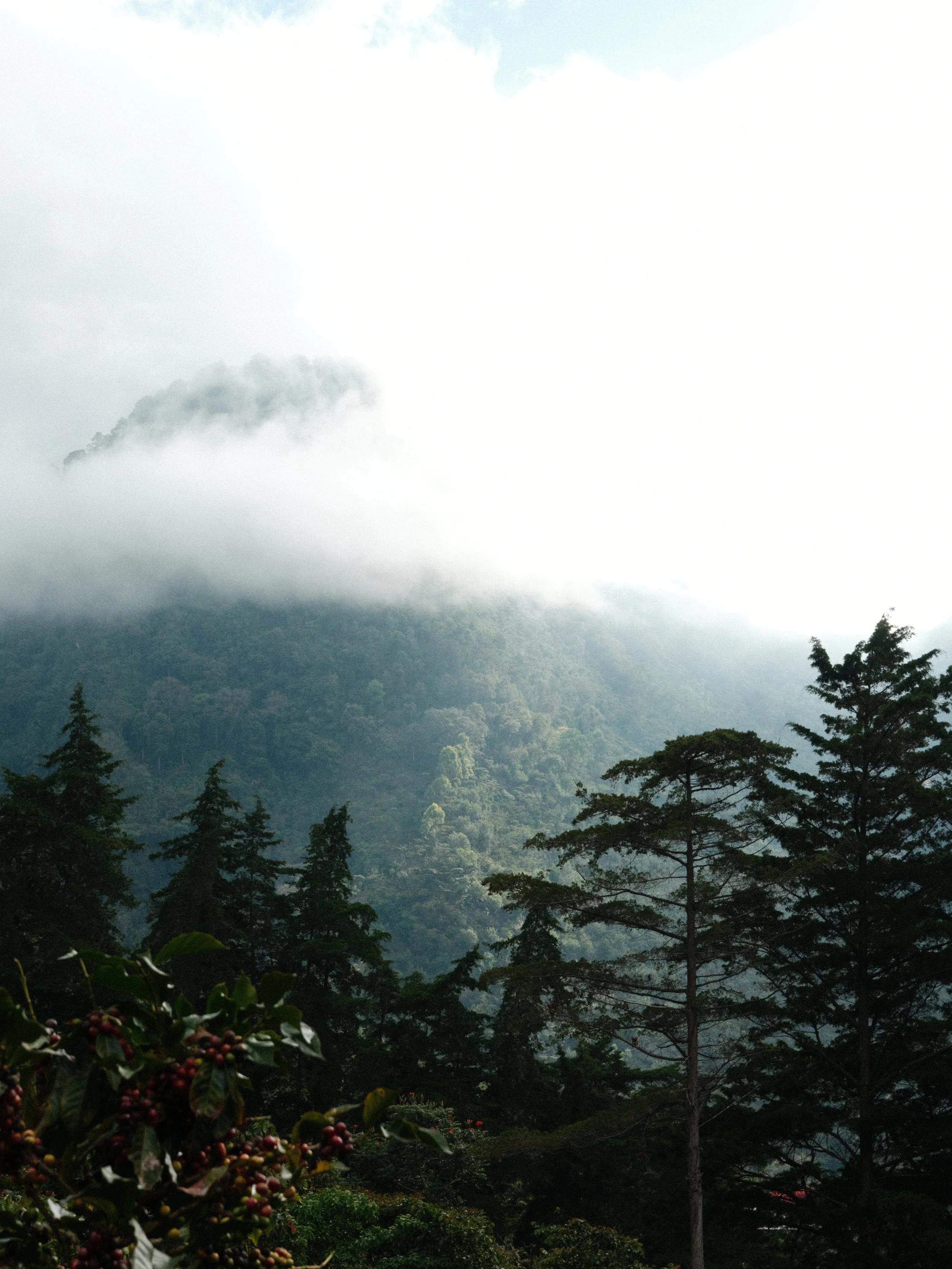
Even though it was peak winter harvest, the weather felt more like a mild spring day back home — highs in the 70s, lows in the 50s, and a dry, cool breeze. Not at all the humid, heavy heat we had packed for.
And it makes sense — this temperate climate is perfect for coffee. It was everywhere.
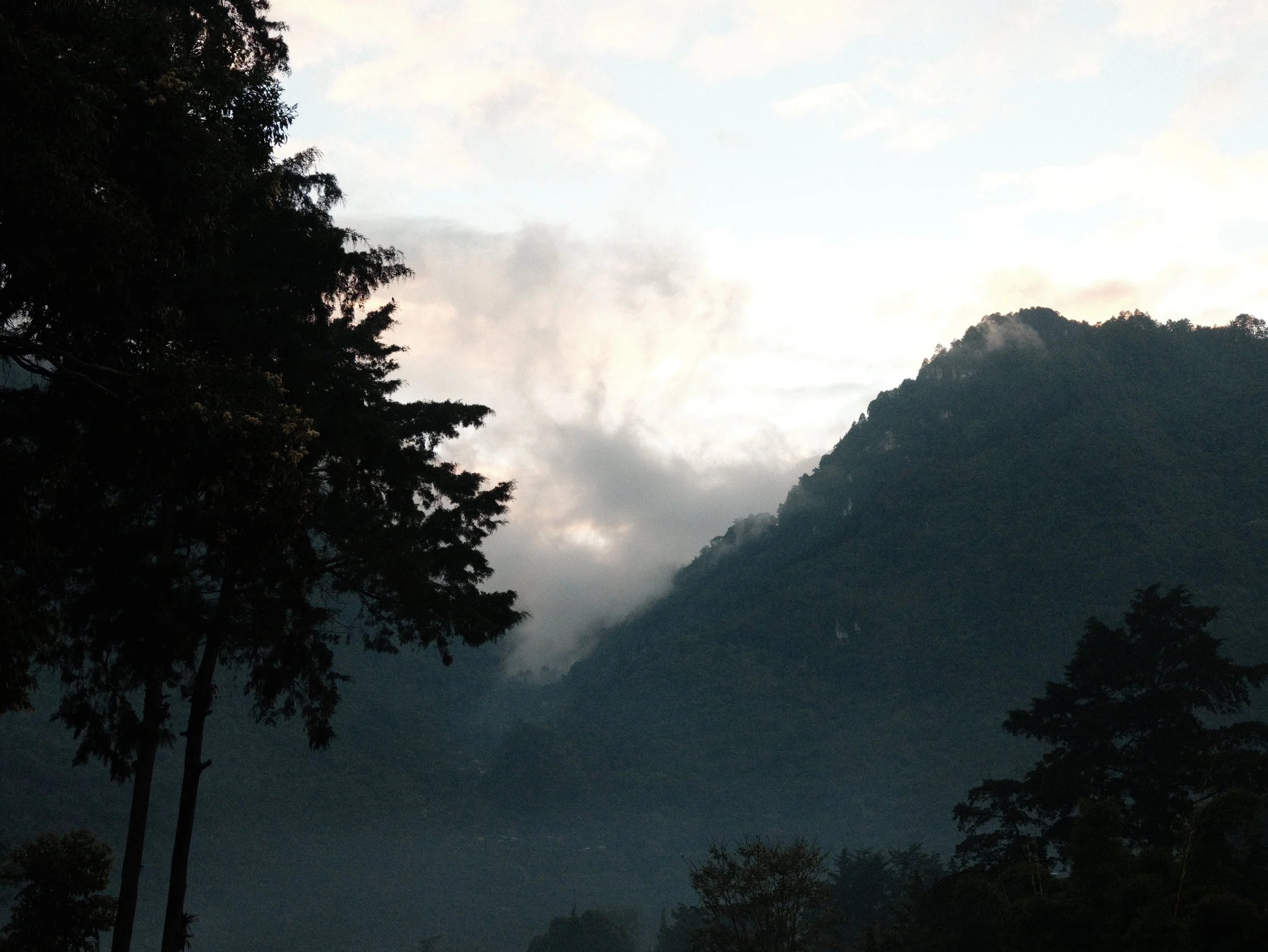
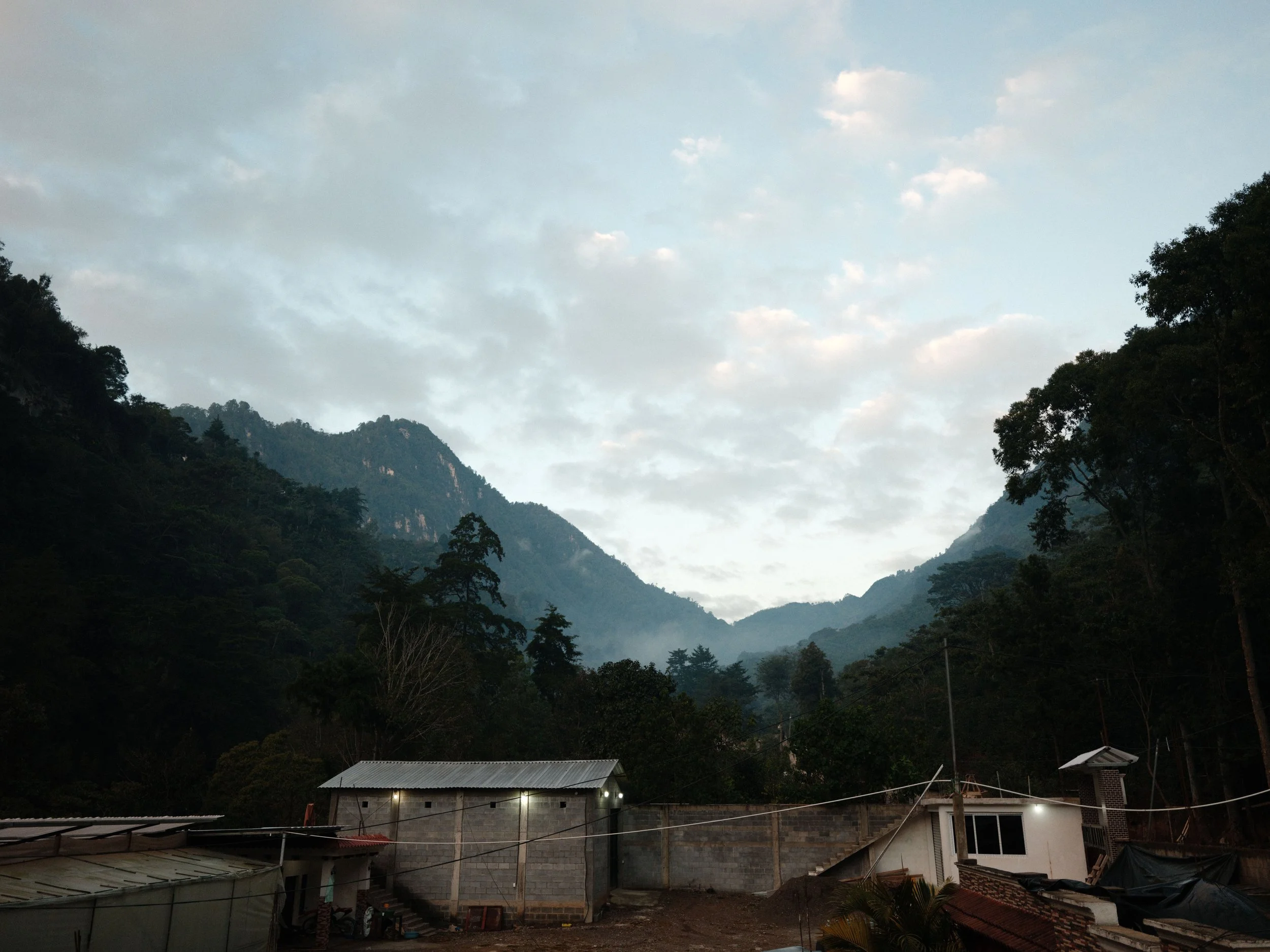
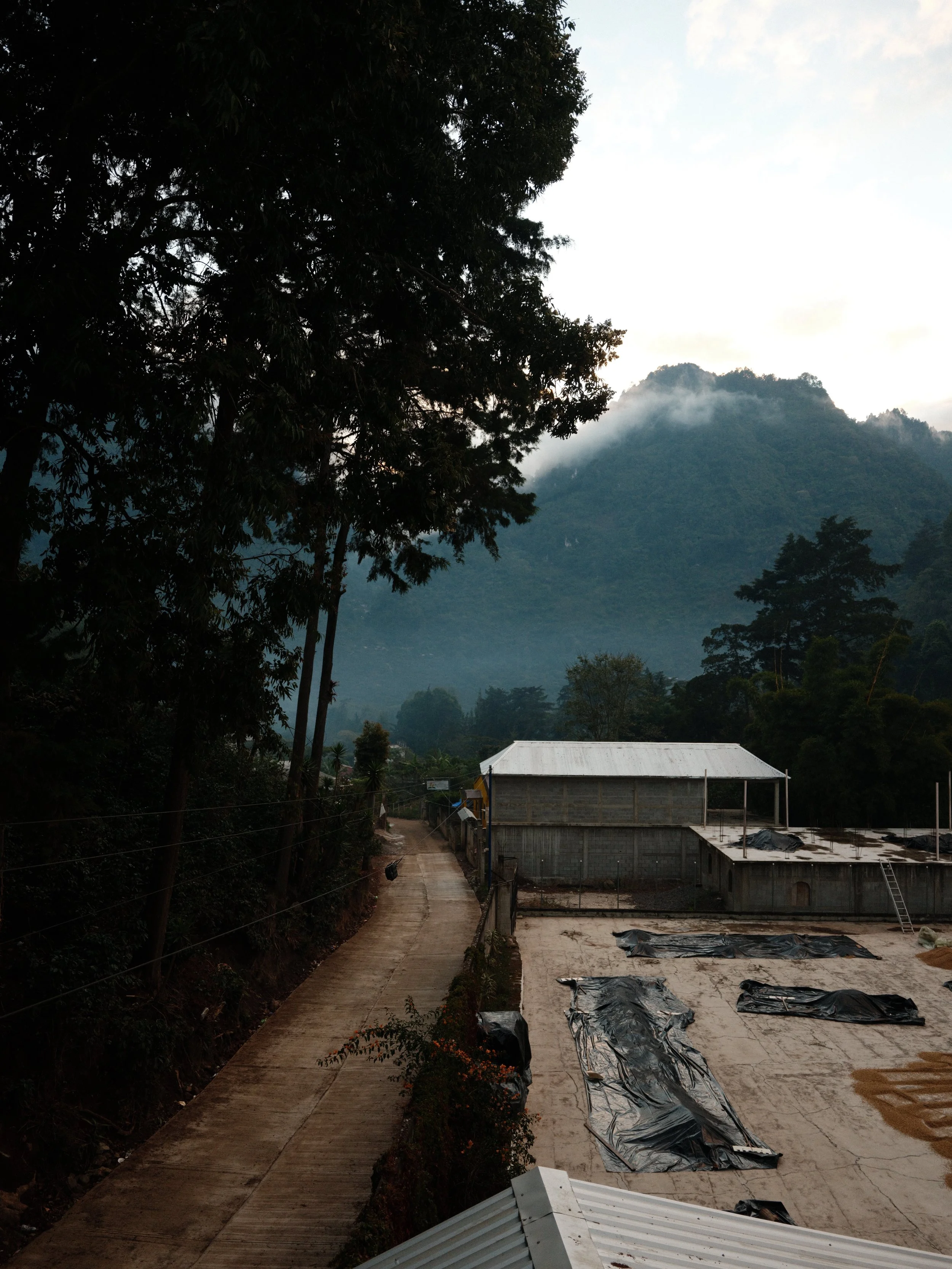
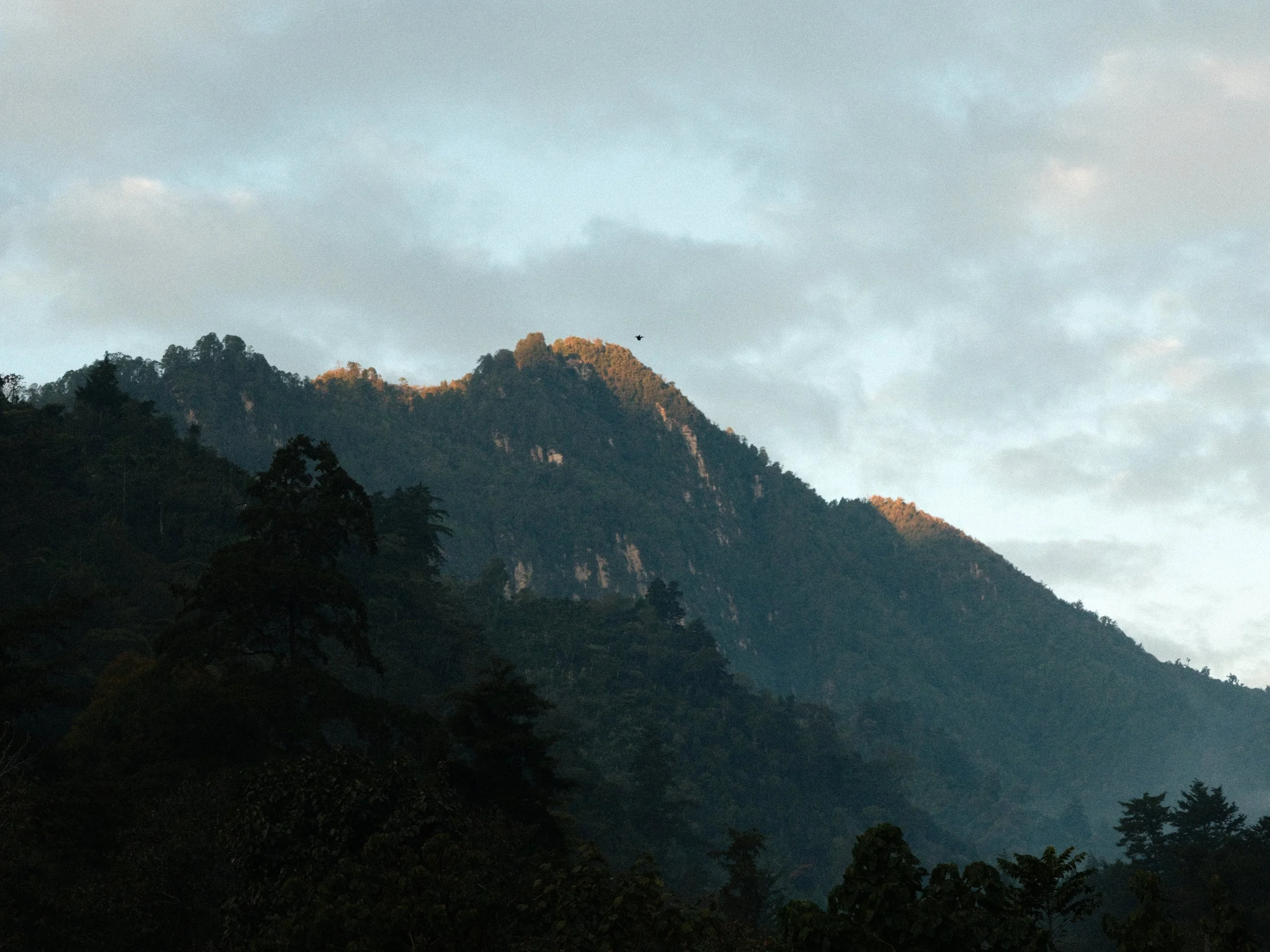
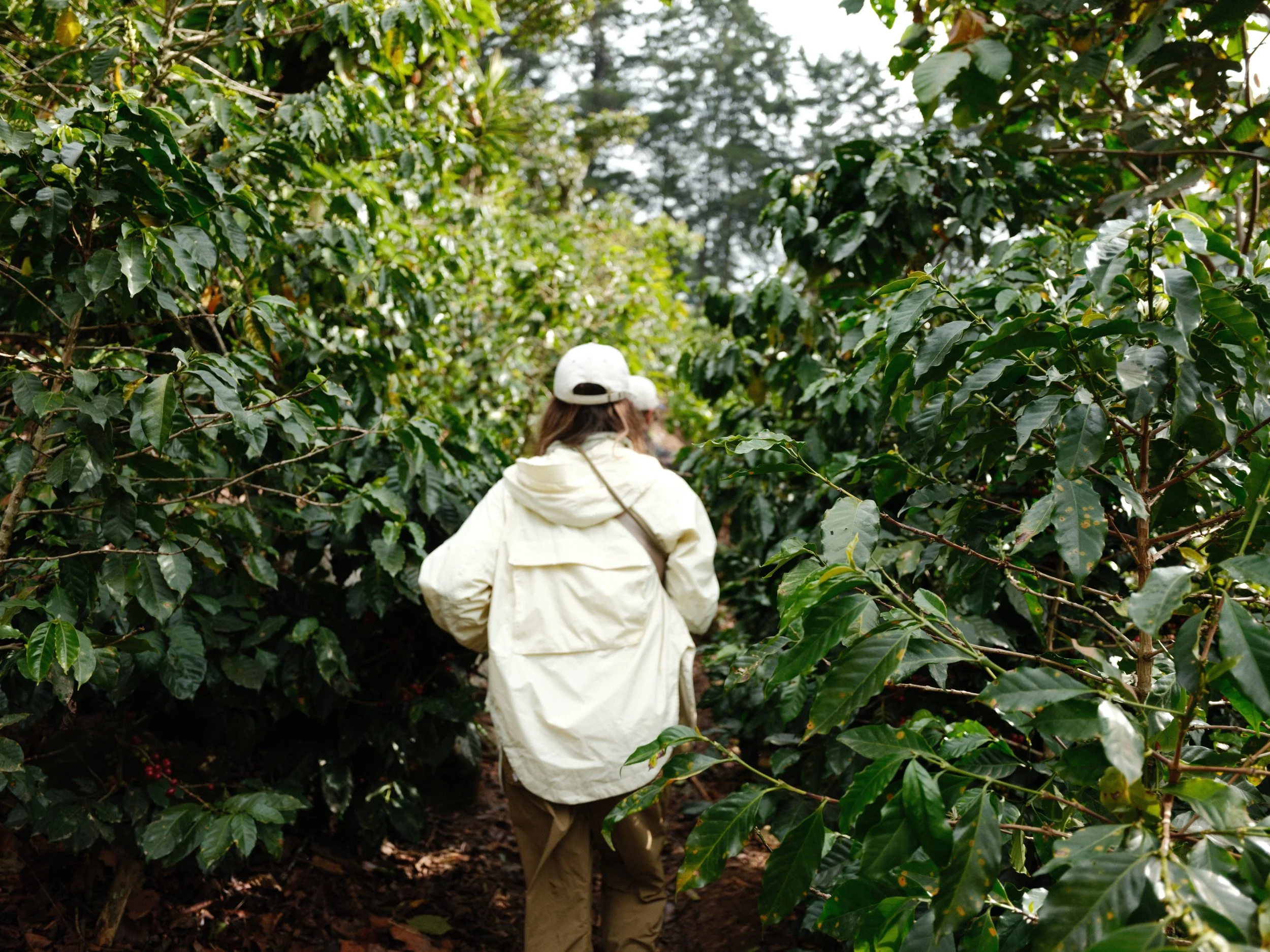
Contrary to what we imagined, coffee isn’t planted in neat orchard rows with tidy irrigation lines. It runs wild. Along the side of the road, pushing through cracks in the pavement; covering the mountainside in thick, endless green. Once you notice it, it’s all you can see.
Though we missed heading out before sunrise with the workers, we followed Rodin and his farm manager, Nufo, up the hillside later that morning. Winding along narrow, single-track trails through dense, coffee plant, wilderness, was easily one of the highlights of the trip. The views were breathtaking, the weather was perfect, and we had more than a few “is this real?” moments taking it all in.
A little while up, we stopped to try our hand at picking coffee cherries.
Our ambitious goal? A humble 50 pounds, split between the five of us: Oscar and Rachel (our importer friends from Onyx Coffee), Marisa, Ben, and Nufo. For context, a typical haul at Punta Del Cerro is 100–150 pounds per worker, with neighboring farms reaching upwards of 200 pounds per person.
Picking coffee cherries is far more technical than we expected. Cherries on the same branch can ripen at slightly different rates, demanding sharp eyes and quick decisions to select only the deepest red of ready fruit. Add in steep, uneven terrain (often at 45-degree angles) and balancing a basket, while searching for stable footing, becomes an athletic event.
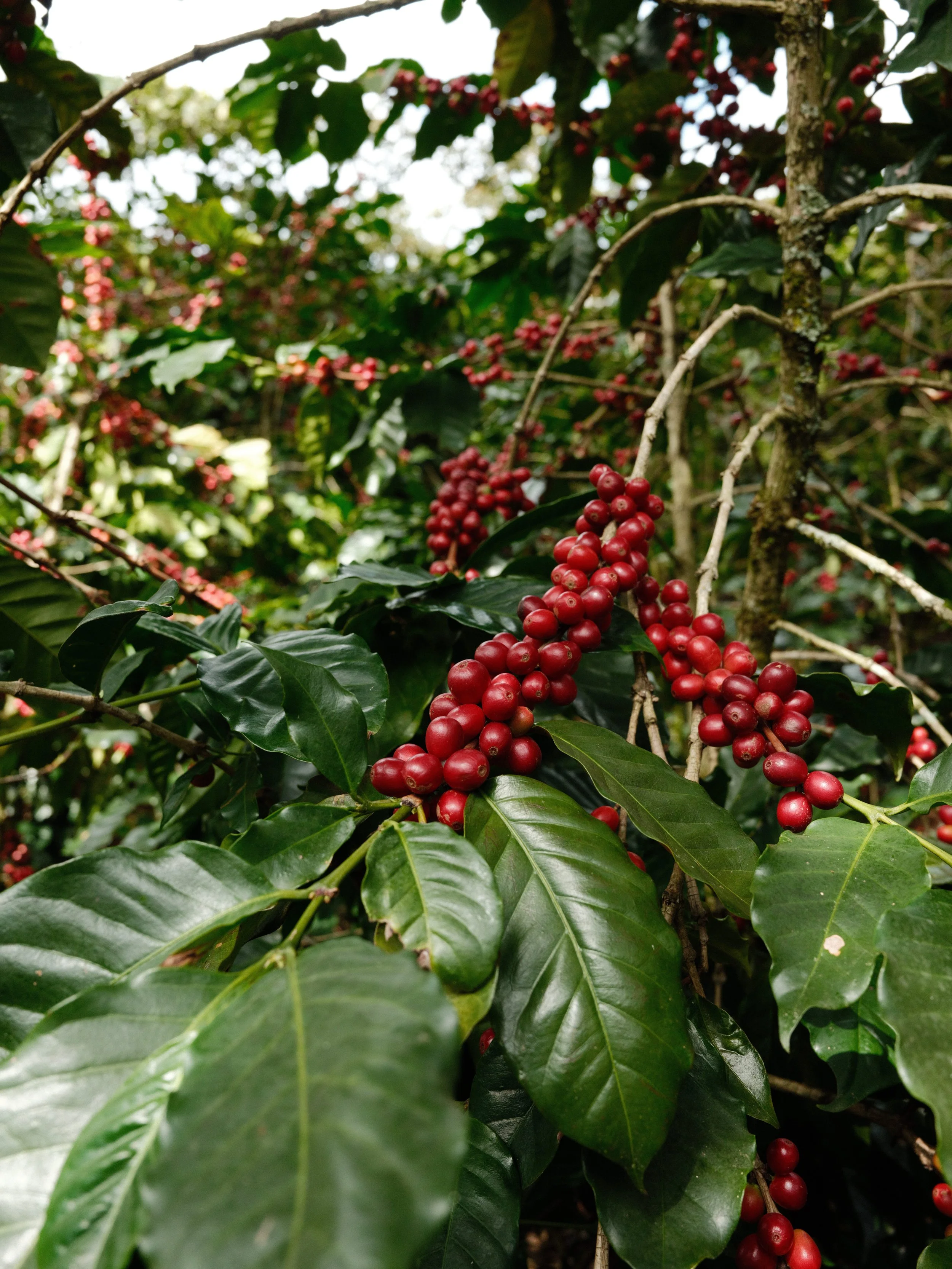
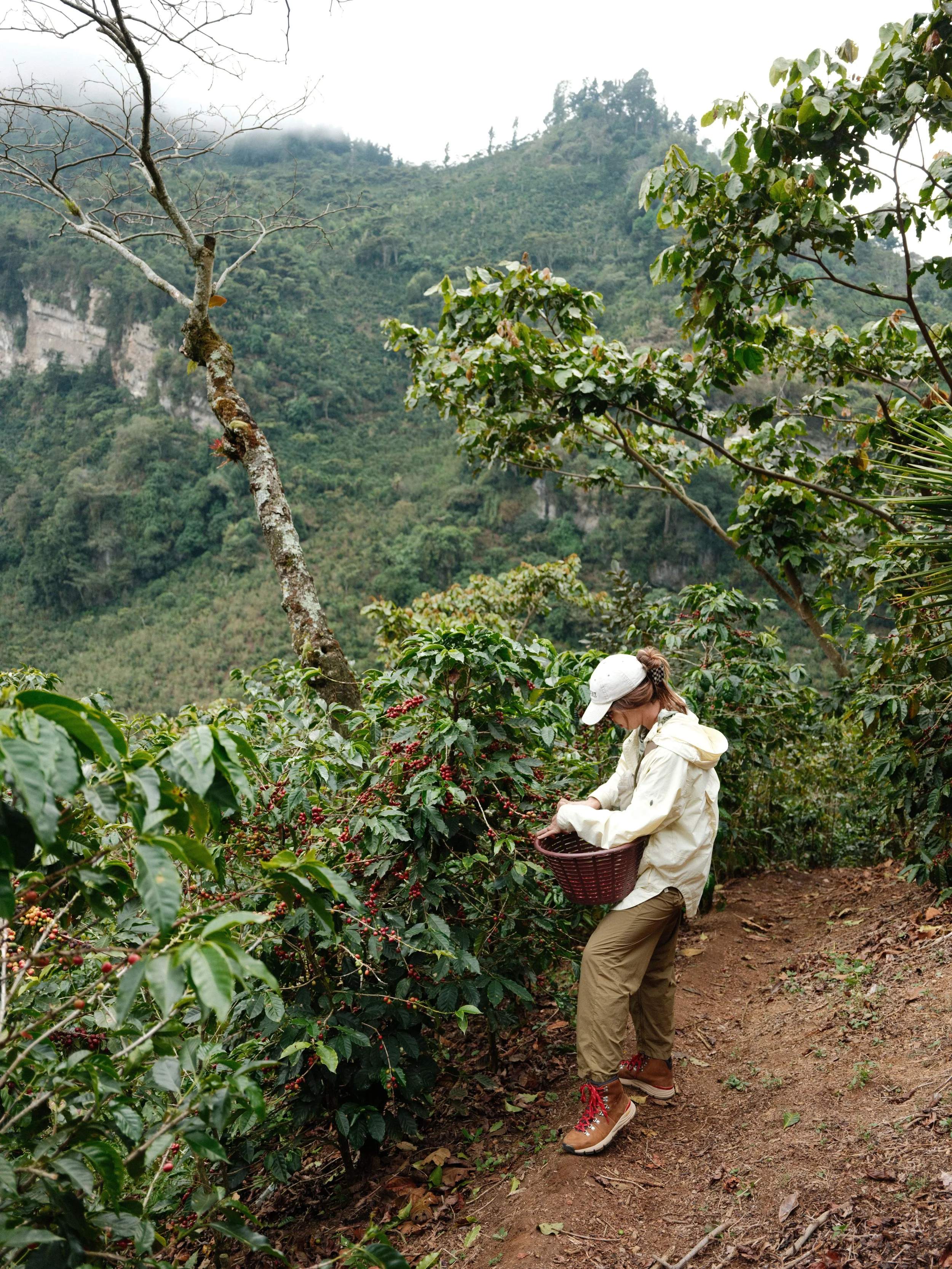
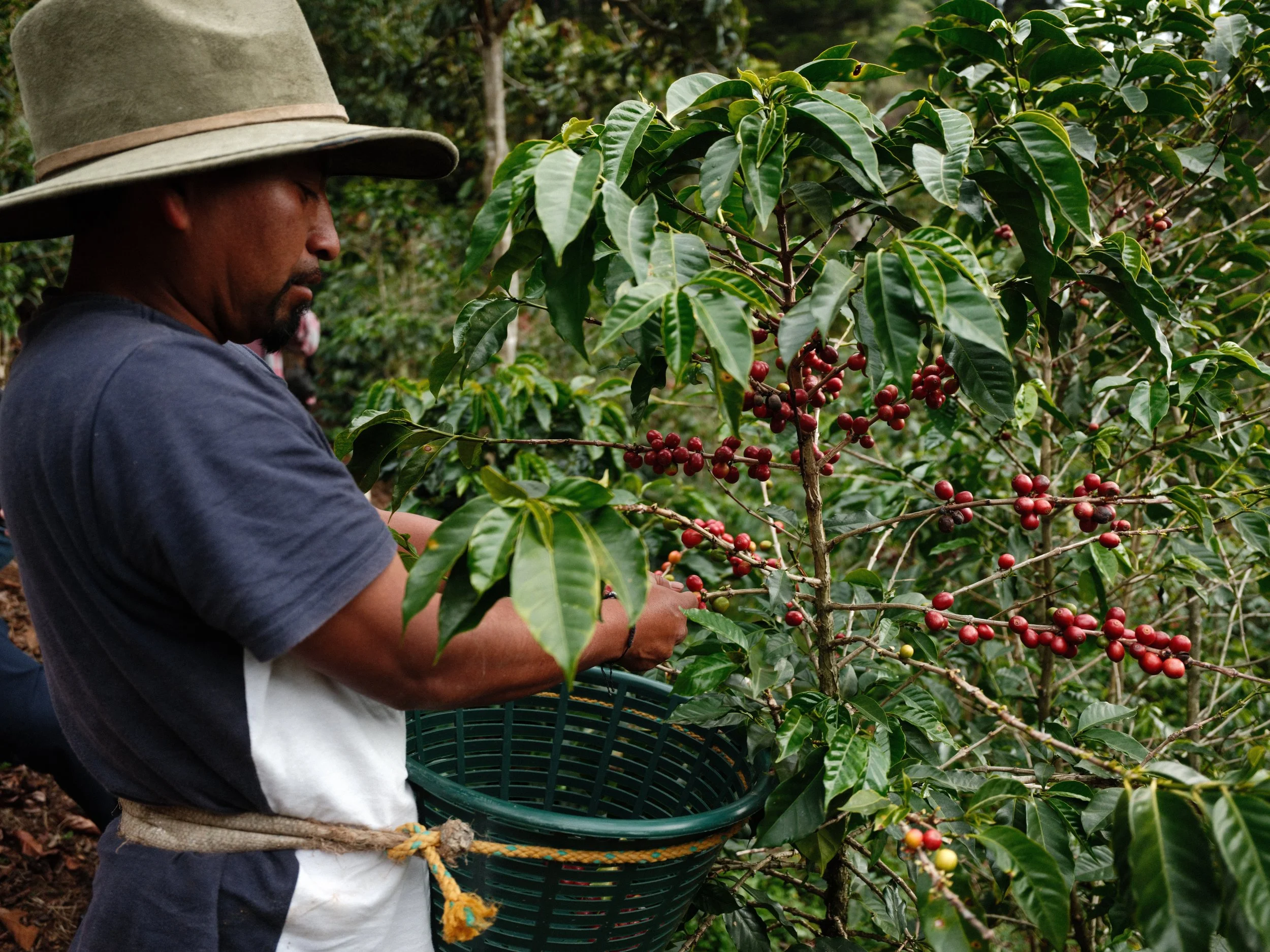
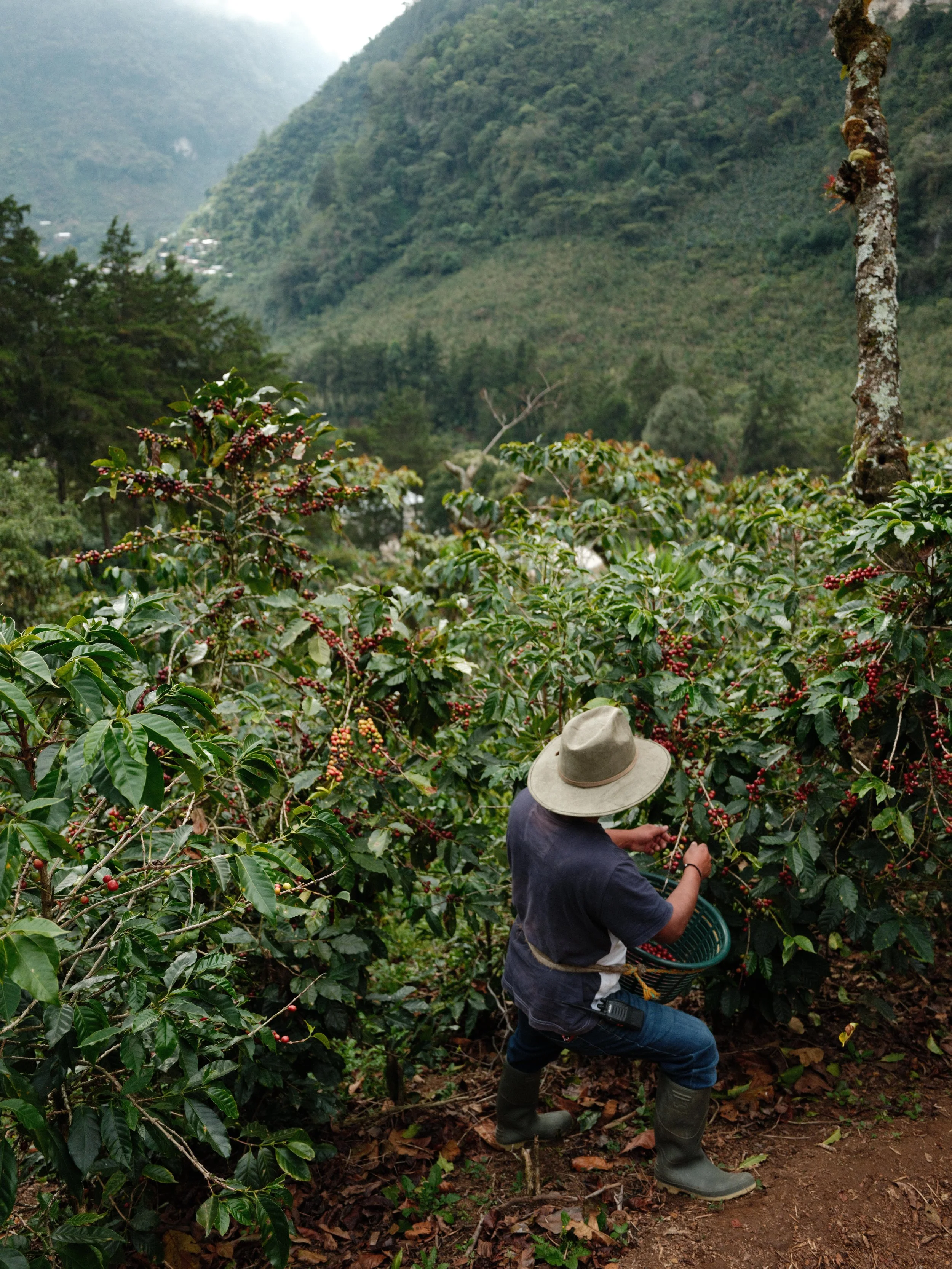
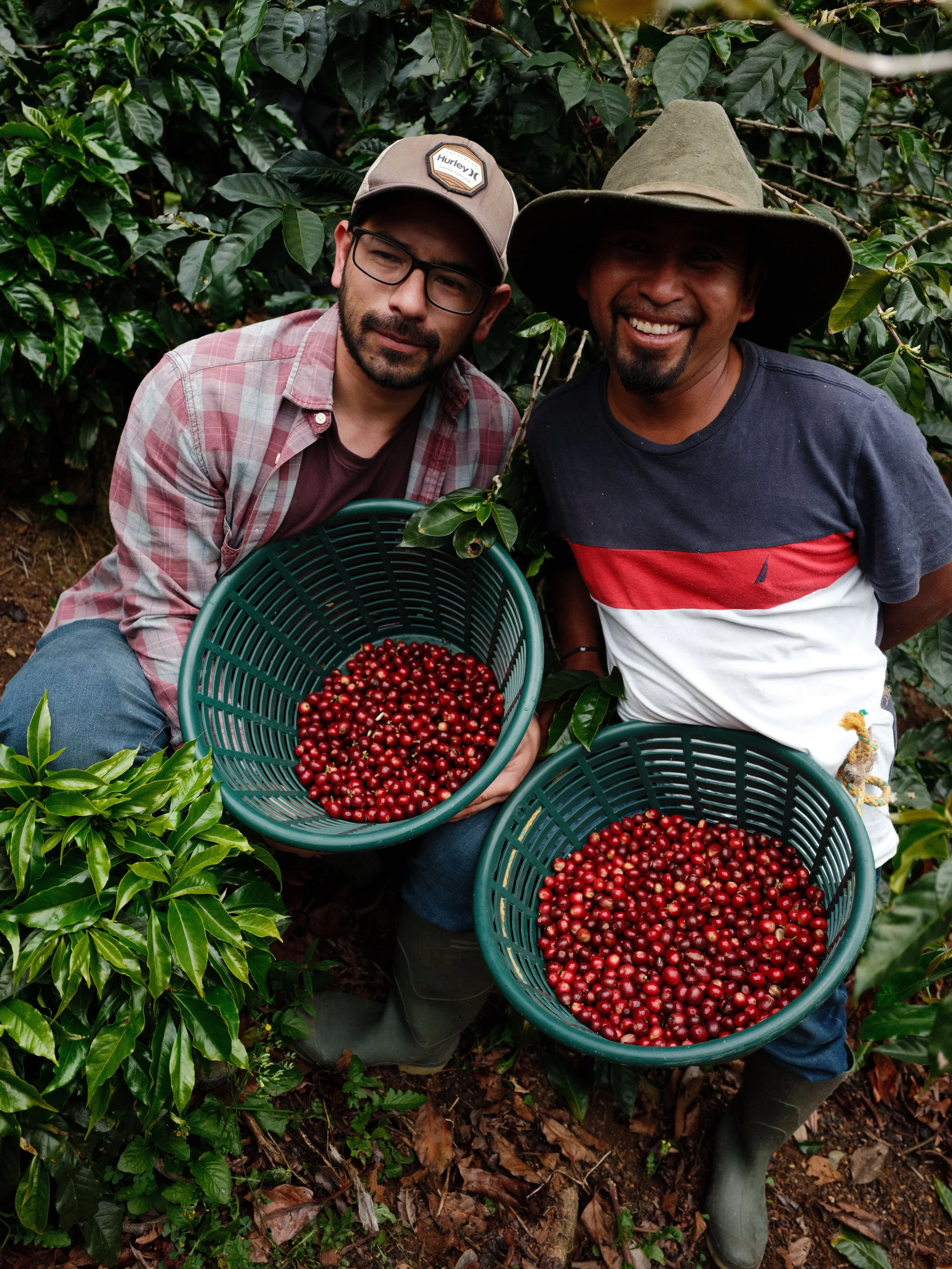
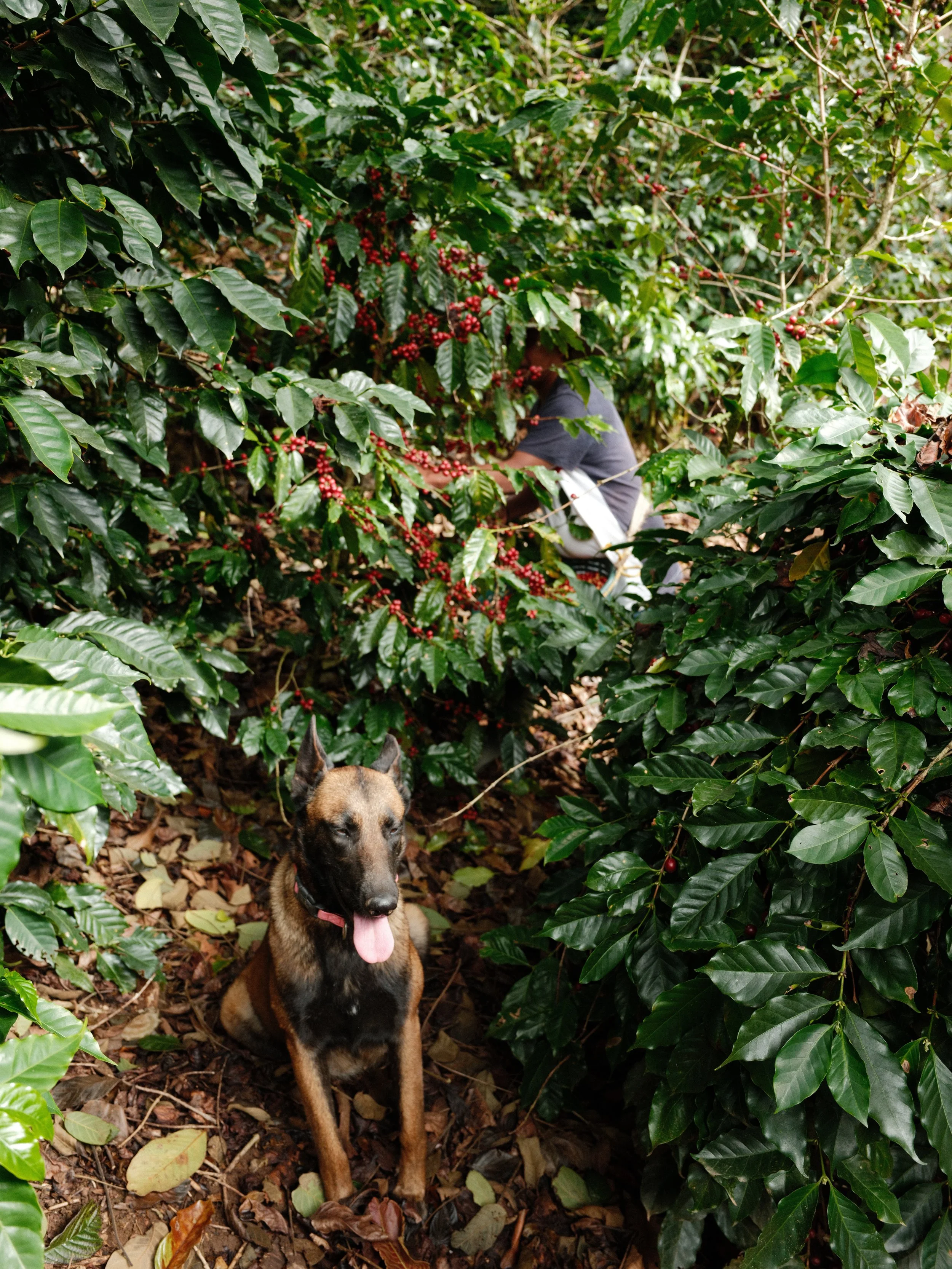
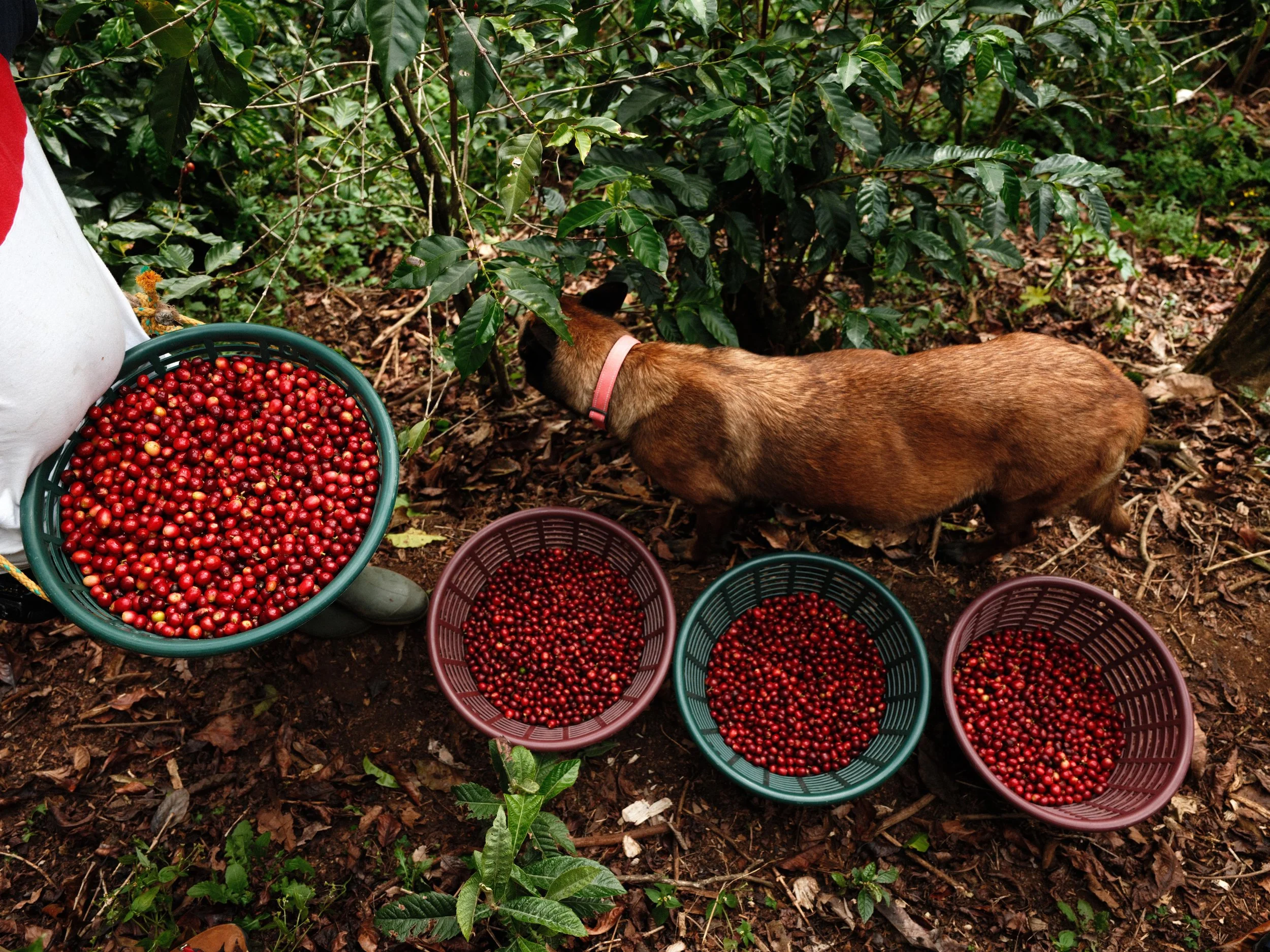
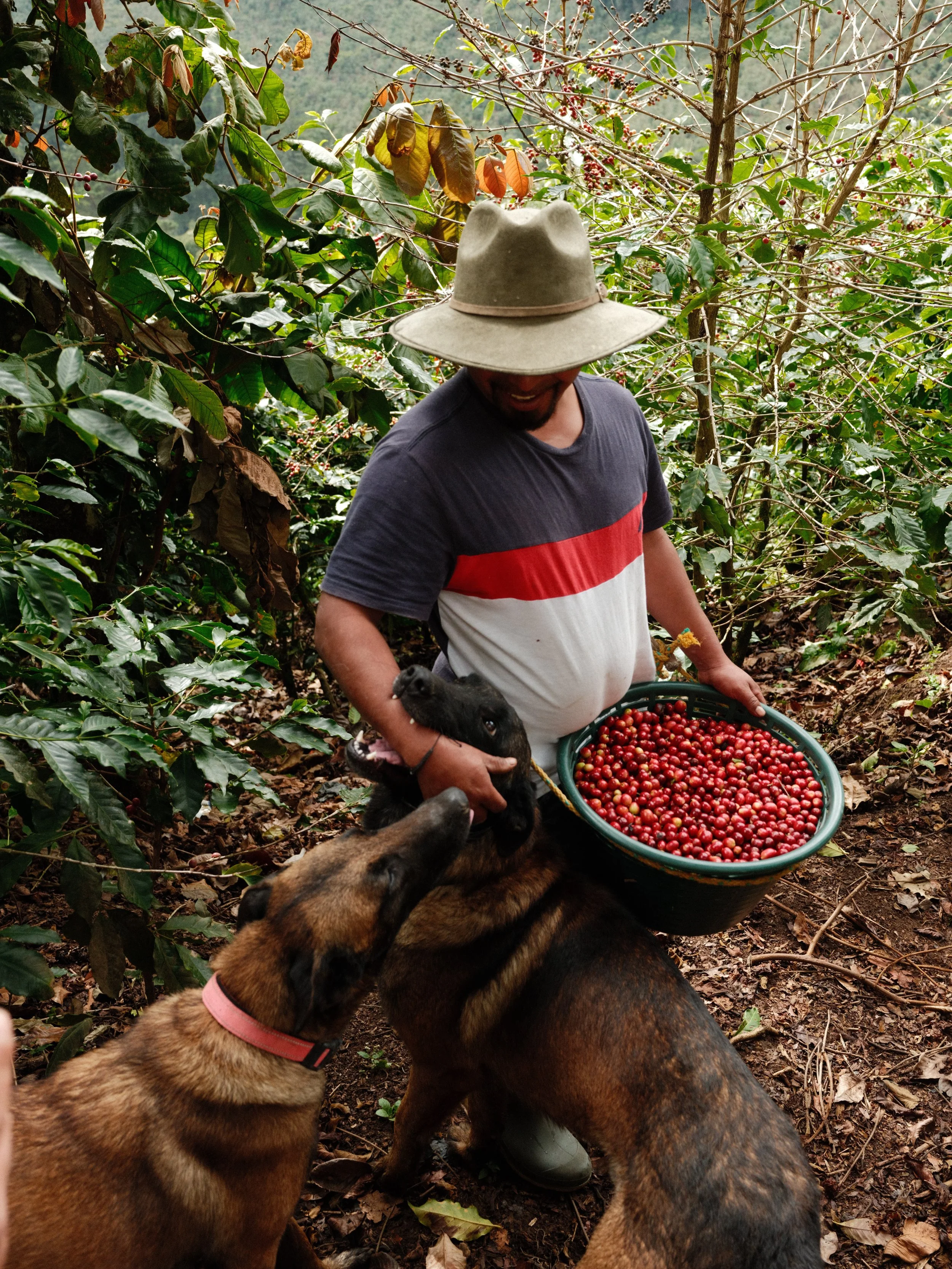
While we carefully (and slowly) selected cherries, Nufo moved with effortless precision — stripping branches of perfectly ripe fruit while leaving behind those that needed a few extra days. Even with frequent pauses to help us, snap photos, and play with Rodin’s adorable Malinois pups, Bruno and Becca, his basket filled long before we made a dent.
About 20 minutes later, we’d reached our 50-pound goal and began the careful descent back down. If the climb upward felt steep, the hike down (with full baskets) was another story entirely. I quickly handed my basket off to Ben, the more sure-footed of us. He powered through, though I could practically hear his heart racing as he guarded his precious cargo from a spill.
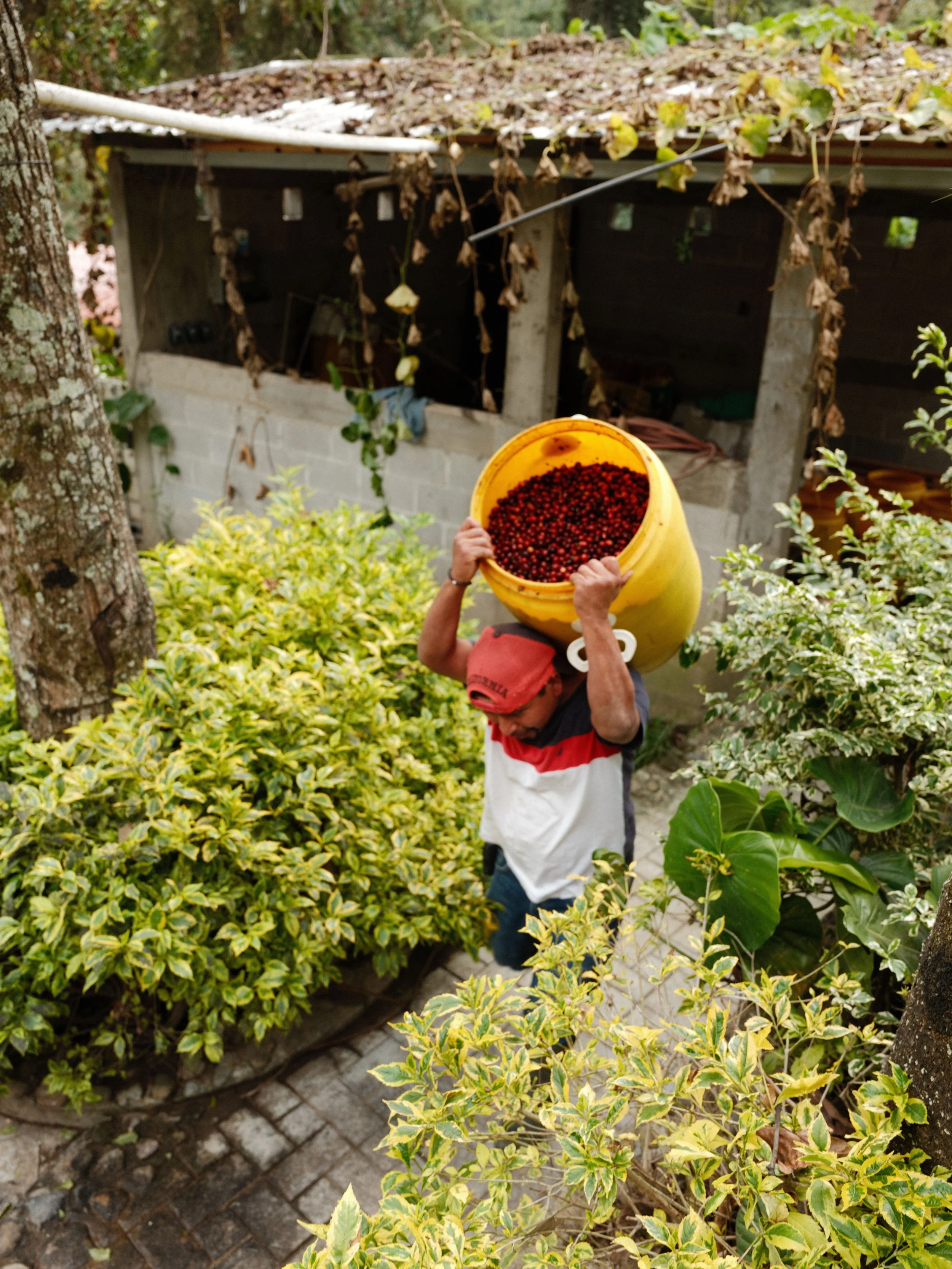
Back on solid ground, we handed off our harvest and headed into the greenhouse, where one of the first steps of coffee processing begins.
COFFEE PROCESSING: THE GREENHOUSE
I’m a sucker for a greenhouse, and this one was no exception. The first thing that hit us? The smell. Honestly, someone please make this into an Anthropologie candle.
Fermenting cherries filled the space with a deep, jammy, sweetness, layered with a soft, earthiness – like a wine cellar or damp wood after a rain. There’s a touch of tang in the air from the active fermentation, but it’s rounded by a deep, fruit-sugar richness that makes you want to lean in closer.
And we absolutely did.
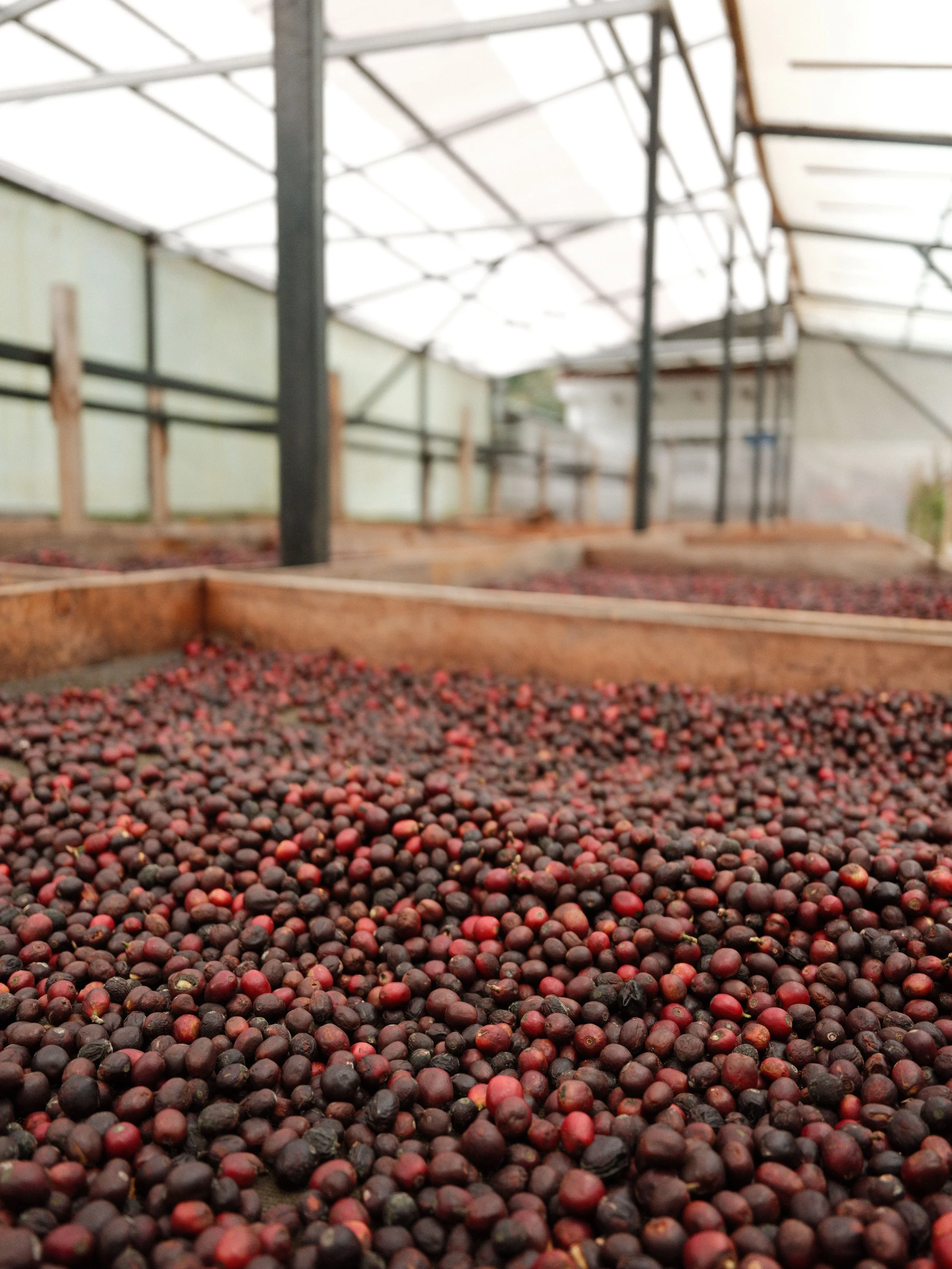
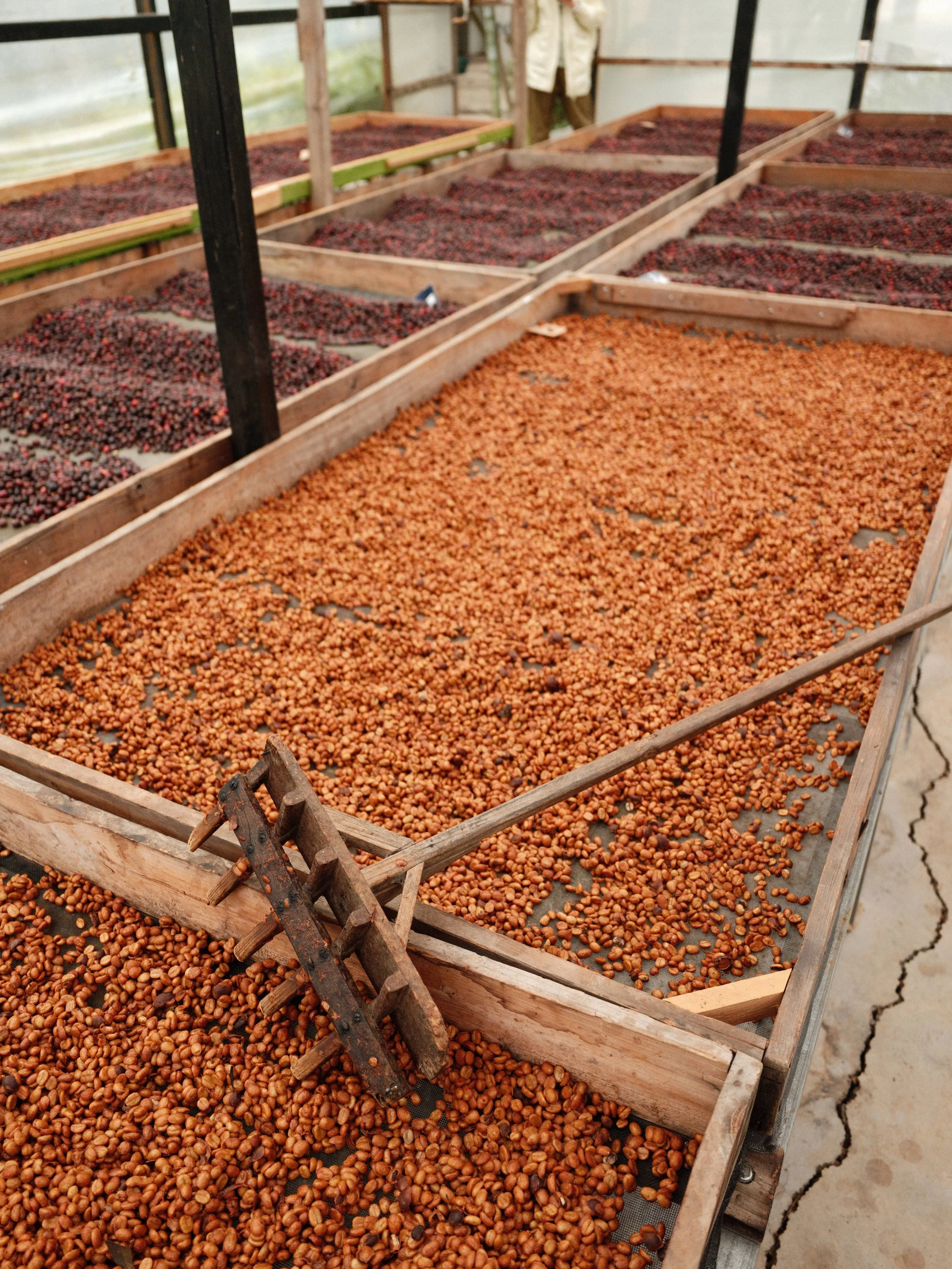
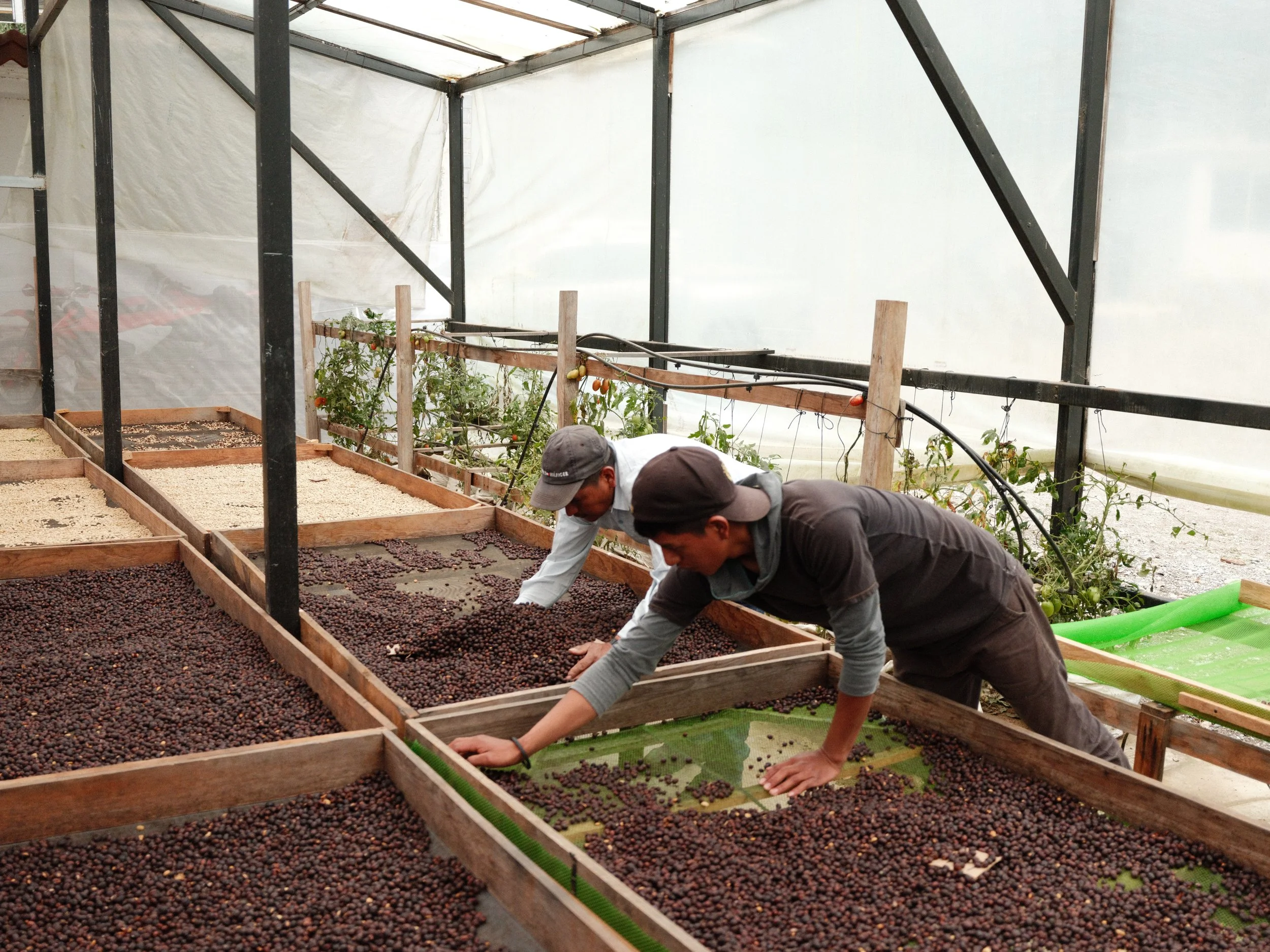
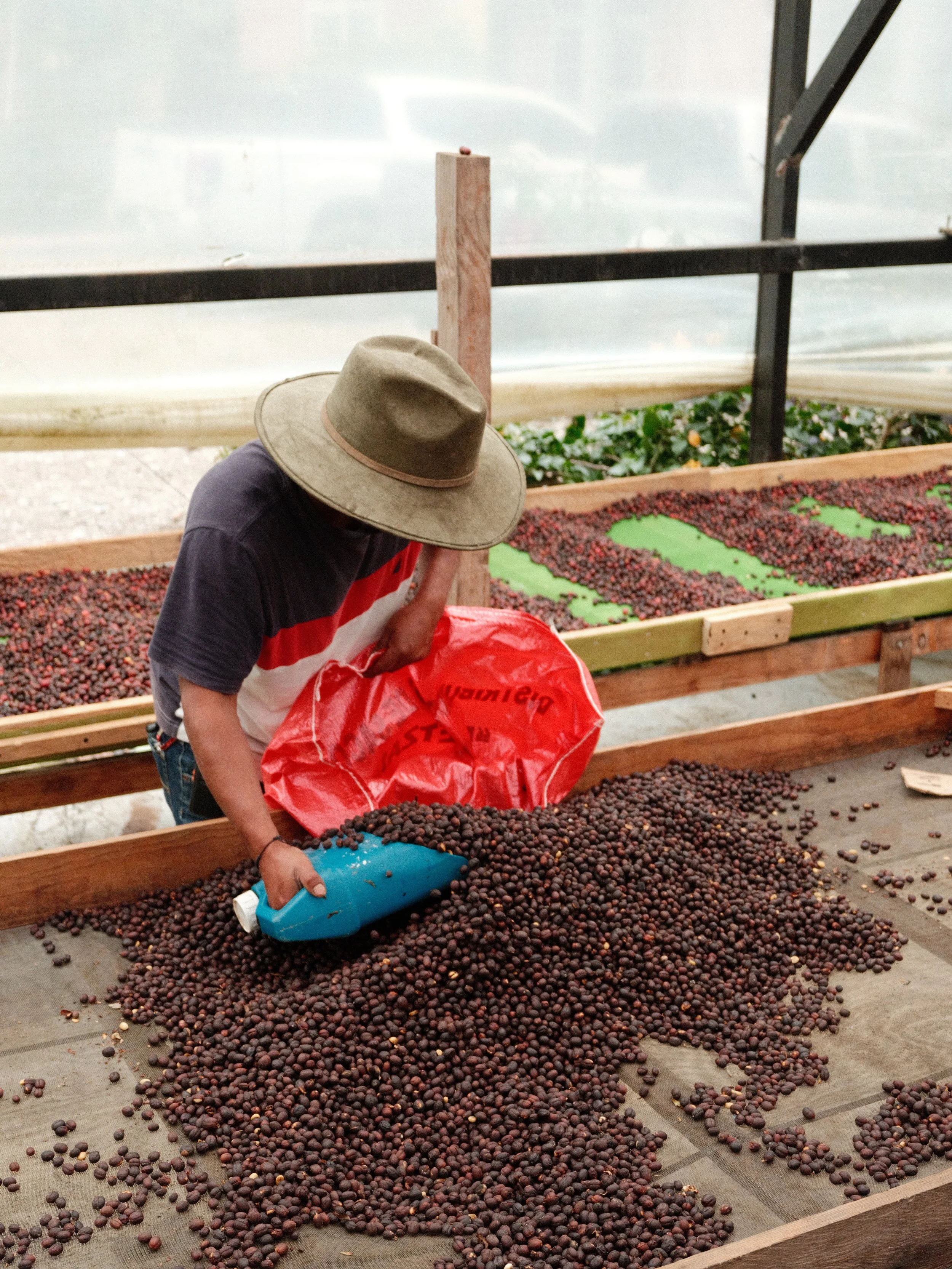
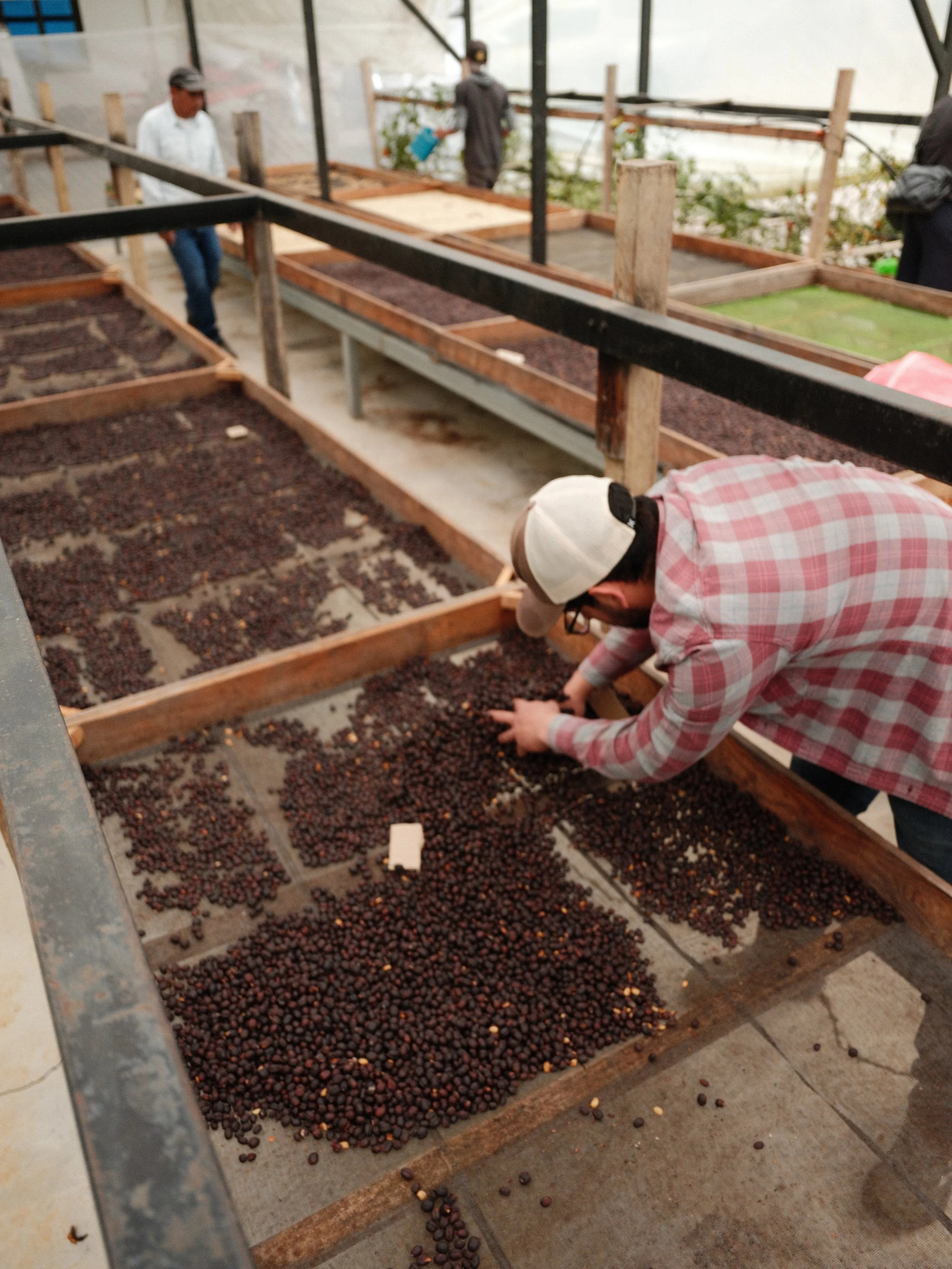
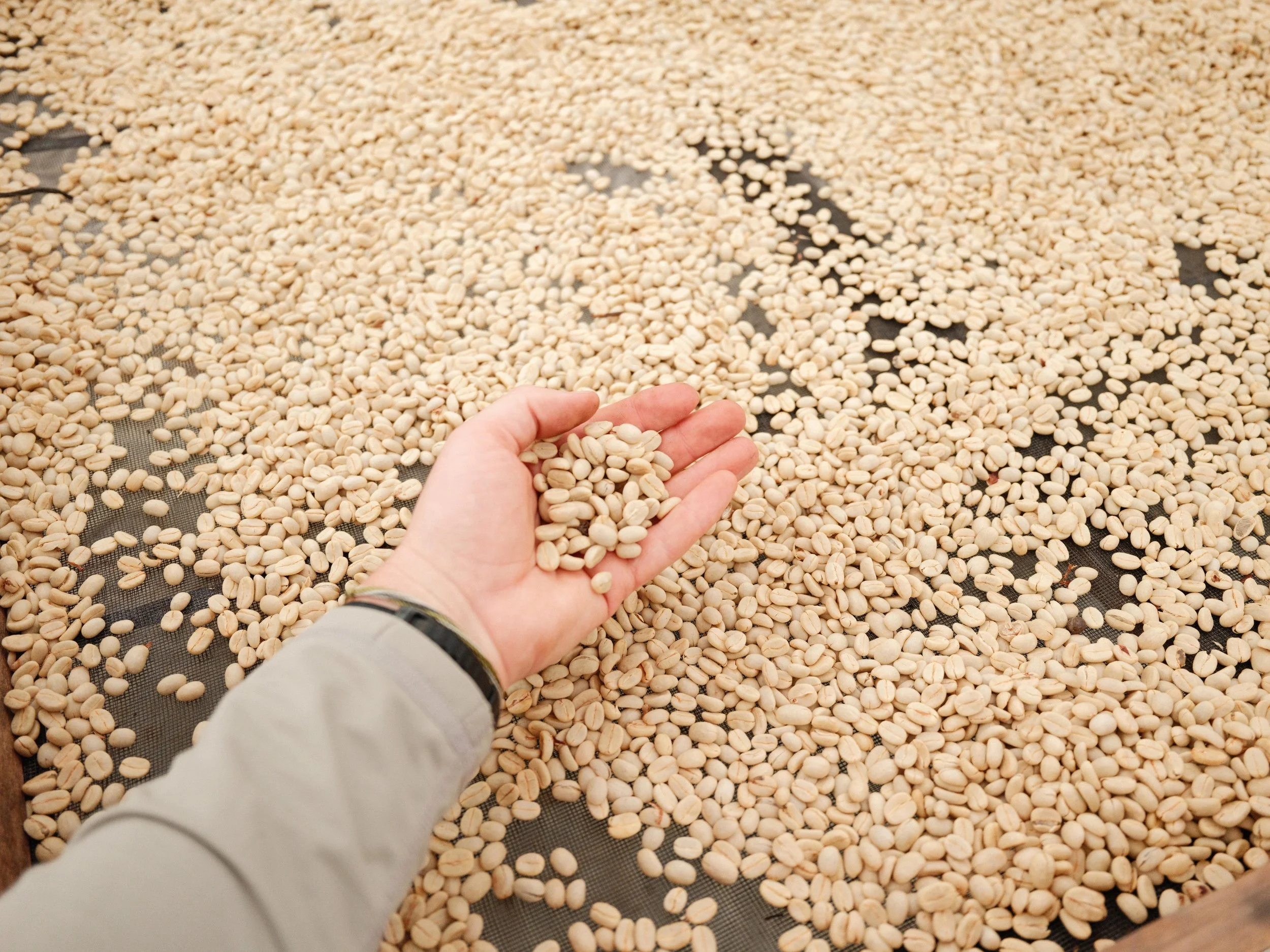
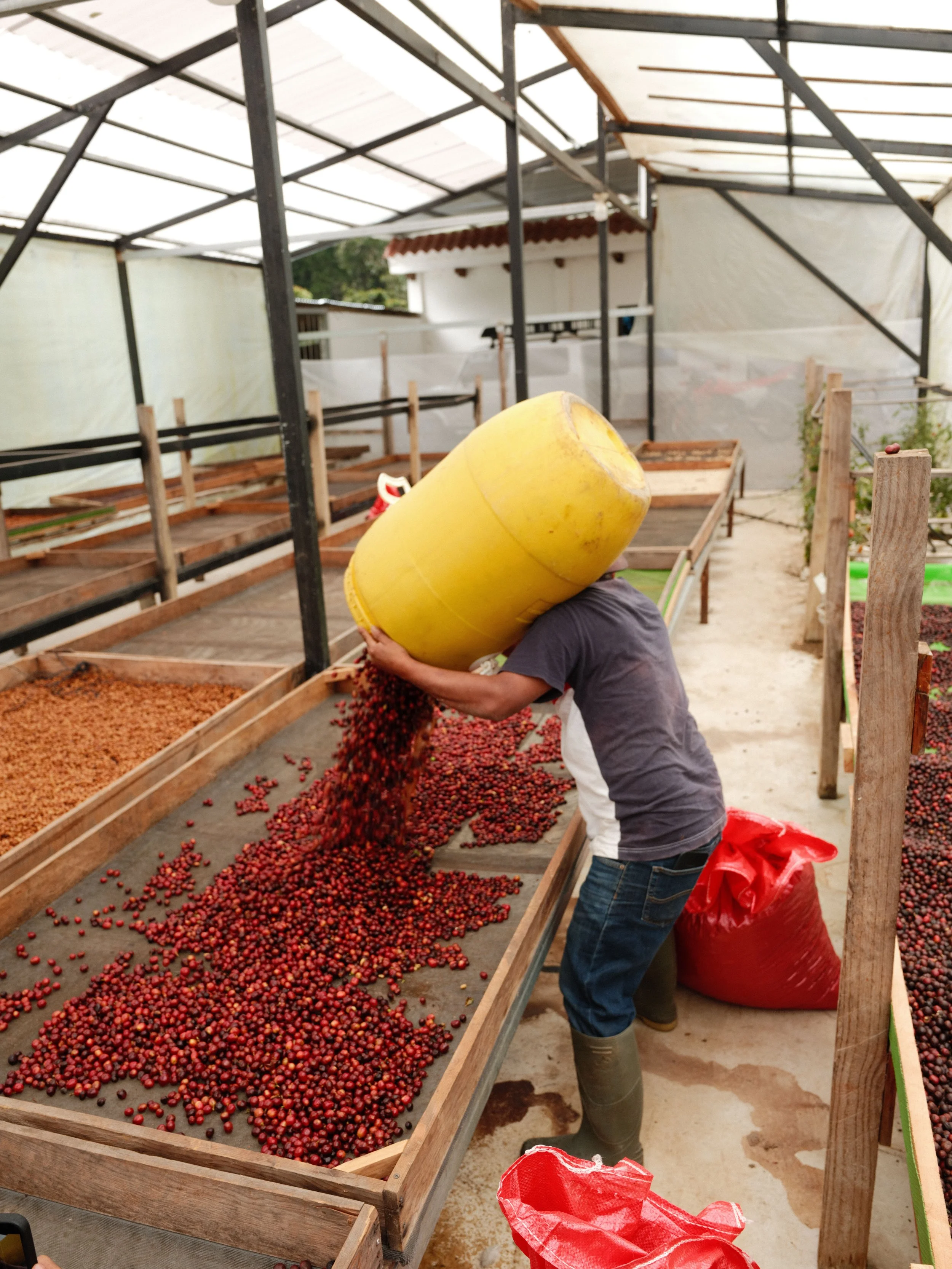
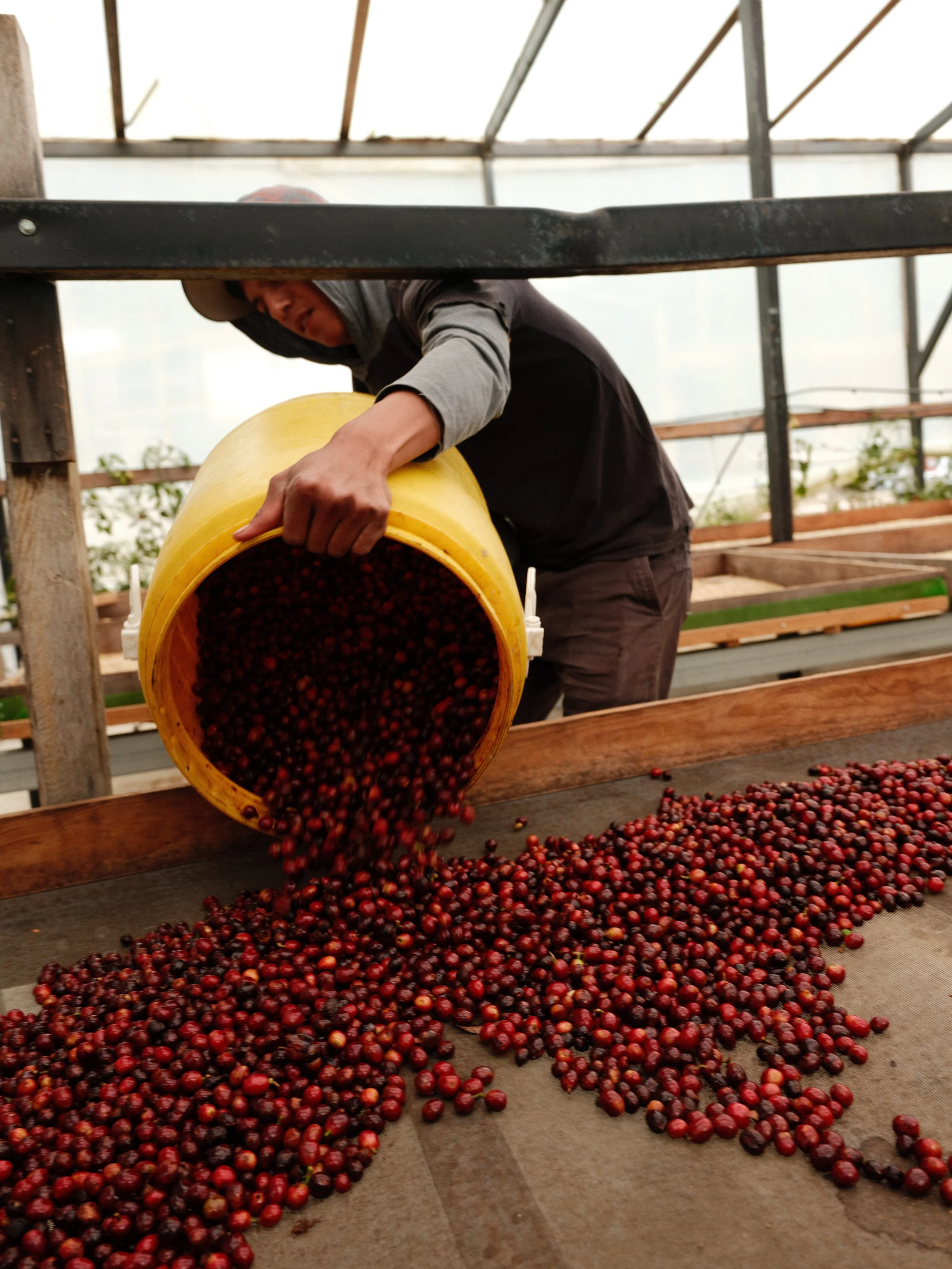
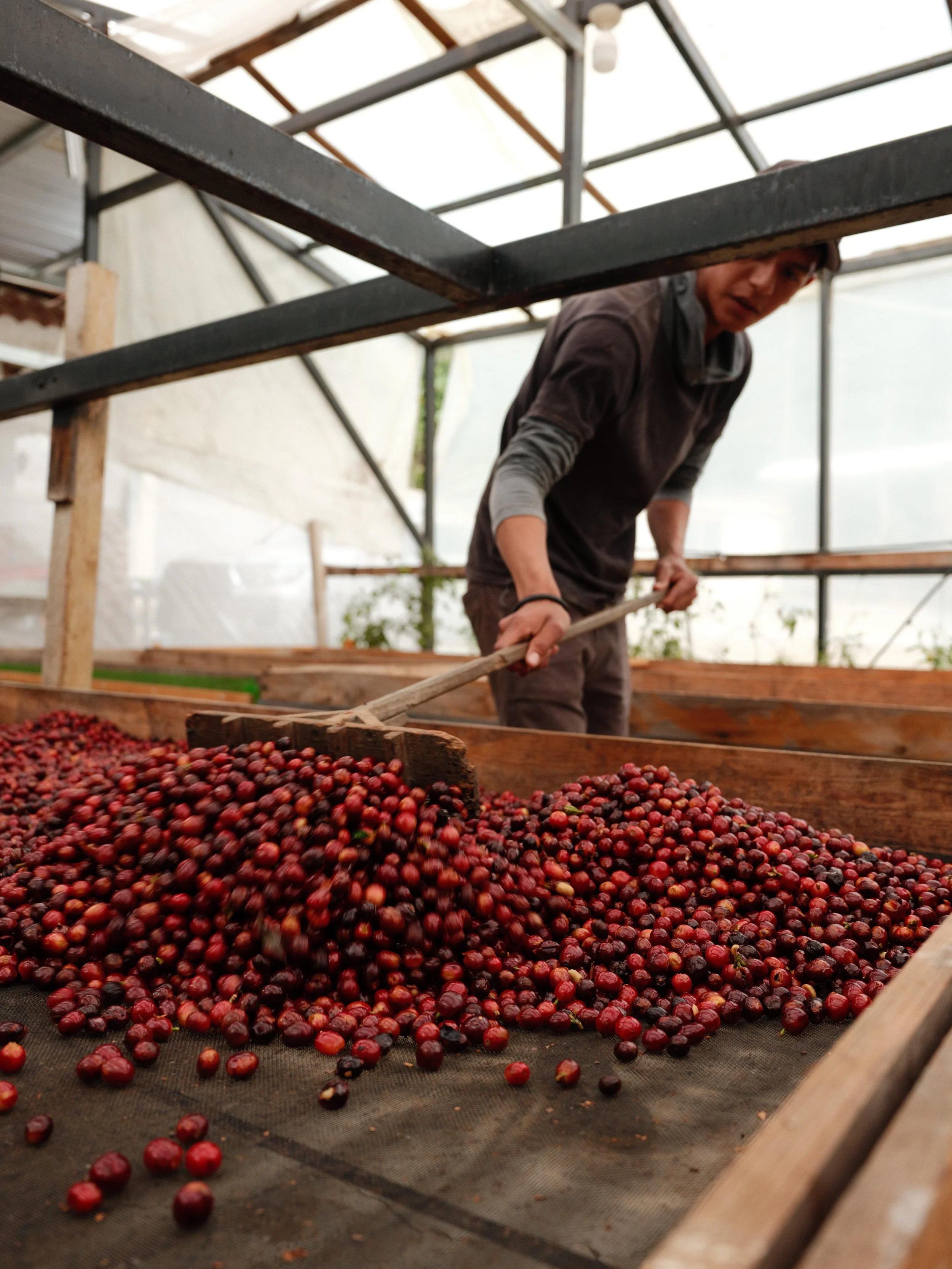
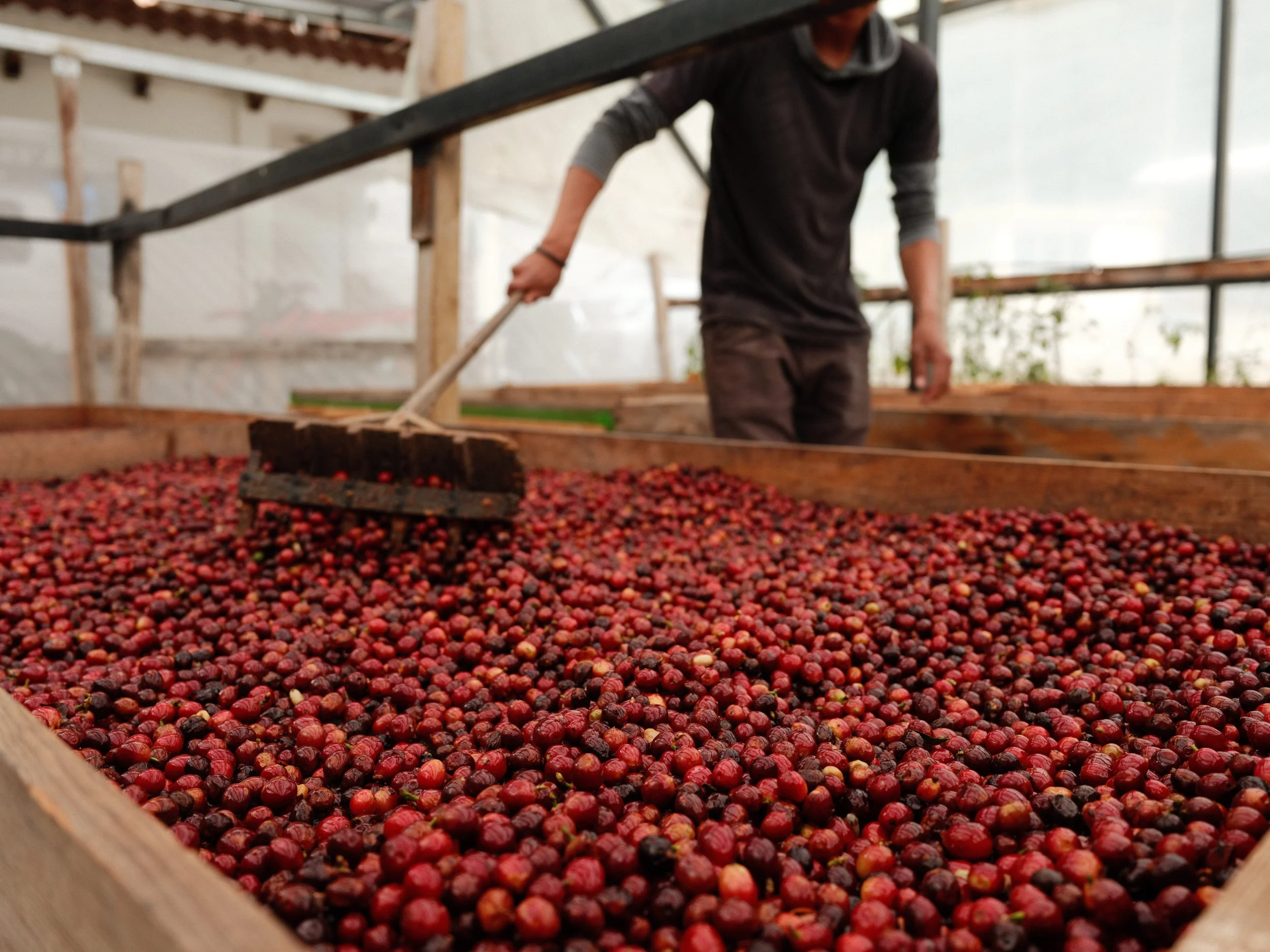
Punta Del Cerro is known for its experimental processing (remember that double fermented coffee from the cupping? Yep, that originated here). Though many different processing methods come to the greenhouse for drying, the space was largely occupied by natural processed cherries.
What is a natural process? This processing method keeps the outer cherry intact while drying, resulting in bigger, fruiter, juicer cups.
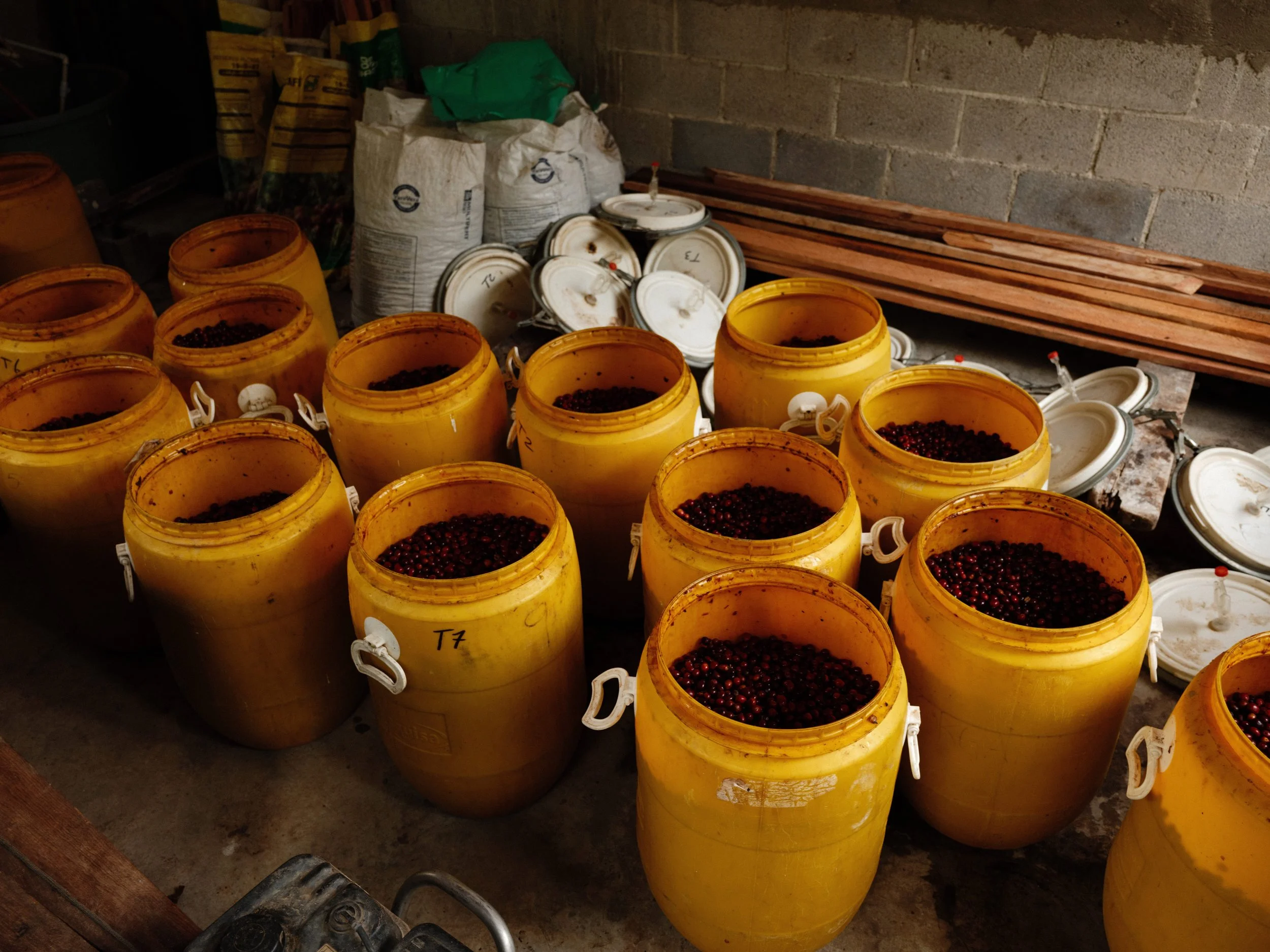
Today, the team at Punta Del Cerro was releasing an anaerobic batch (a natural processes fermented without oxygen) onto the drying beds in the greenhouse. This coffee was picked a few days ago and left to ferment in 60-pound barrels outside of the greenhouse for 46-hours. It’s a delicious cup, with a bright tang up front, followed by big, juicy, red fruit notes that you can only get from fermenting the cherries…but it’s an insanely tricky process.
Fermenting coffee cherries takes immense oversight and training. Any number of factors, like heat, handling, or improper sealing could ruin a batch and cost farmers precious time and resources. It’s a process that takes care, patience, and knowledge to get right – and results in some of the country’s best coffee.
COFFEE PROCESSING: WASHED COFFEE
You’ll notice from the photos above that not all coffee going into the greenhouse is a natural process with the cherry intact. One of the family's biggest processing exports is washed coffee.
What is a washed process? At its core, washed coffee is simply coffee cherries that have been de-pulped and cleaned, exposing the little green bean beneath. This bean is washed repeatedly with fresh water, to remove any outer, sticky layer, called mucilage. What’s left is a squeaky clean green bean, ready for drying and roasting.
Washing coffee is generally a three-step process:
1) Soaking, 2) Milling, and 3) Final Washing
Though every cherry is picked at the peak of ripeness and shows every sign of a healthy, happy bean inside, some cherries can hide mutations or defected beans within. Here’s where the soaking step comes in.
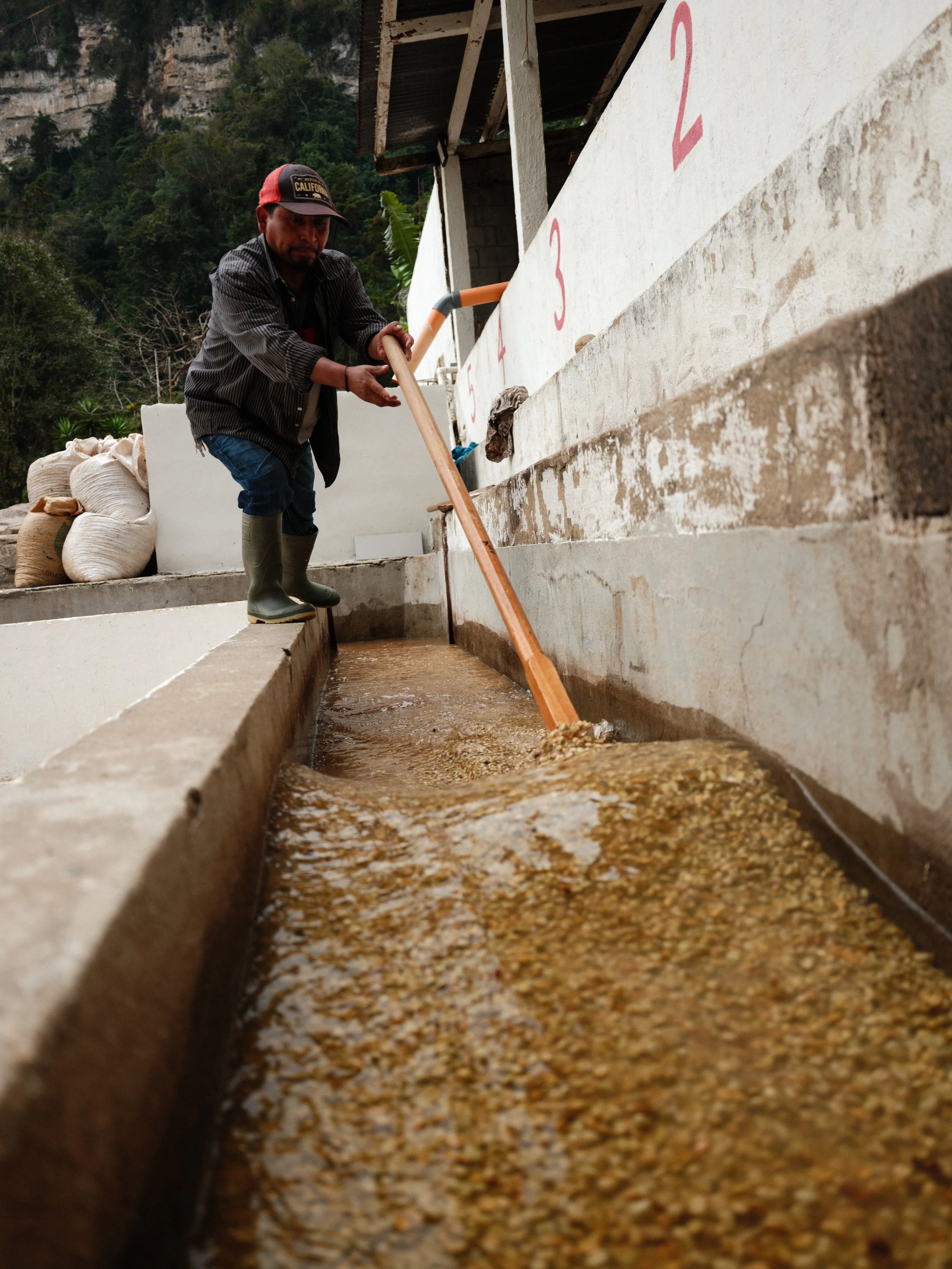
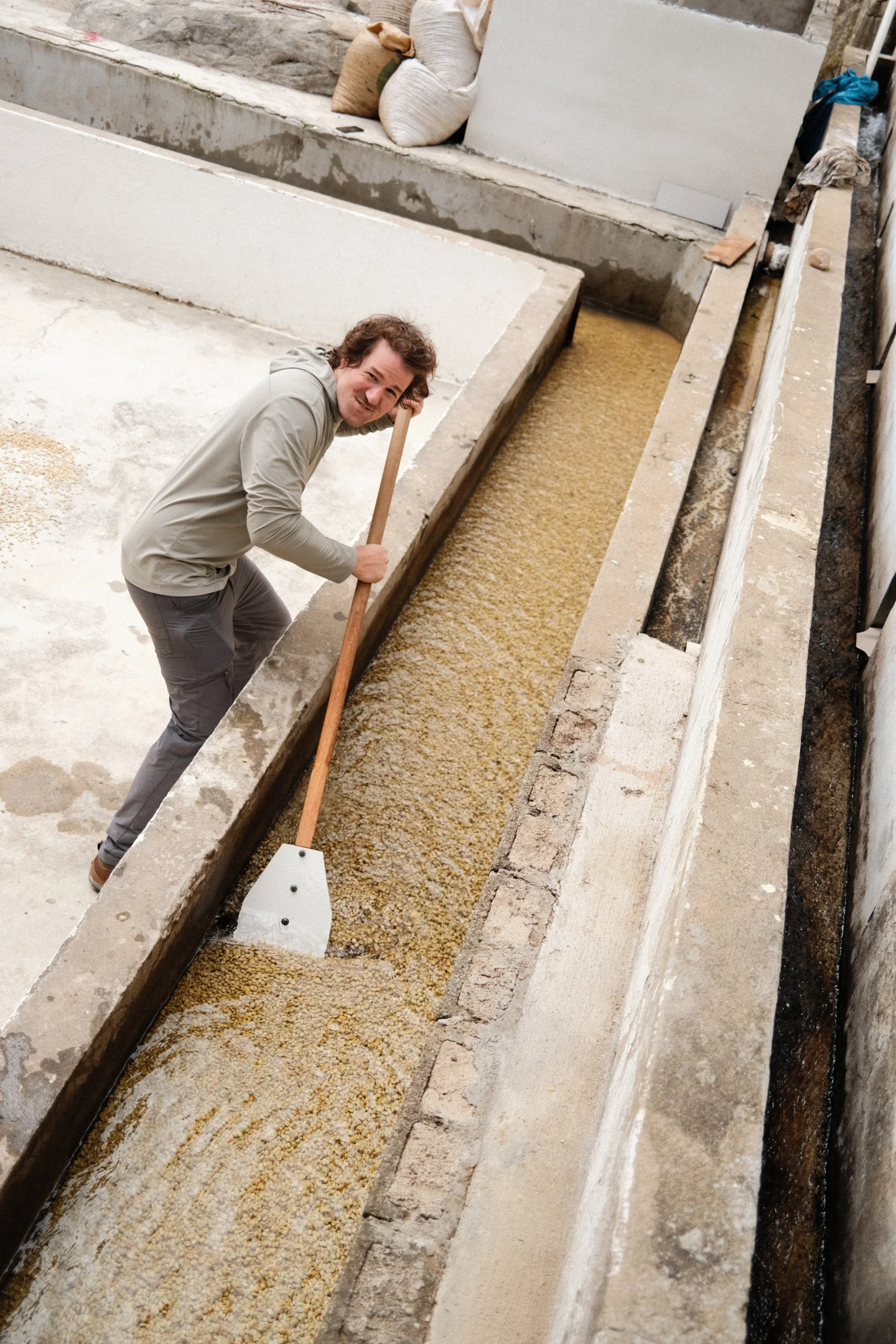
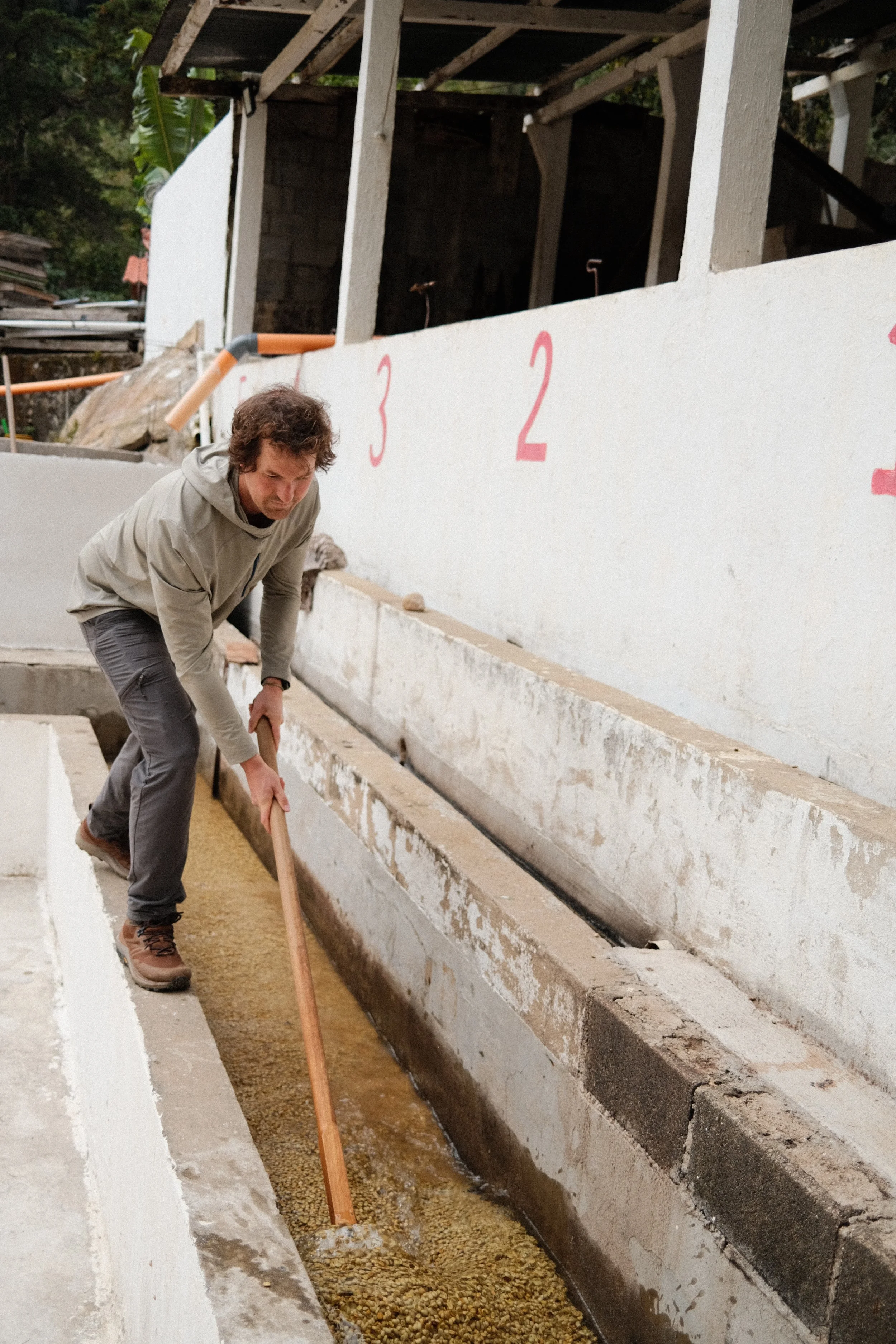
Freshly harvested cherries are funnelled into a large cement tank and filled with clean water; then the cherries are stirred with a long paddle to agitate the tank. Any cherries that float to the surface are less dense, thus deemed defective and removed. What remains are the heavy, healthy cherries we want in our final cup.
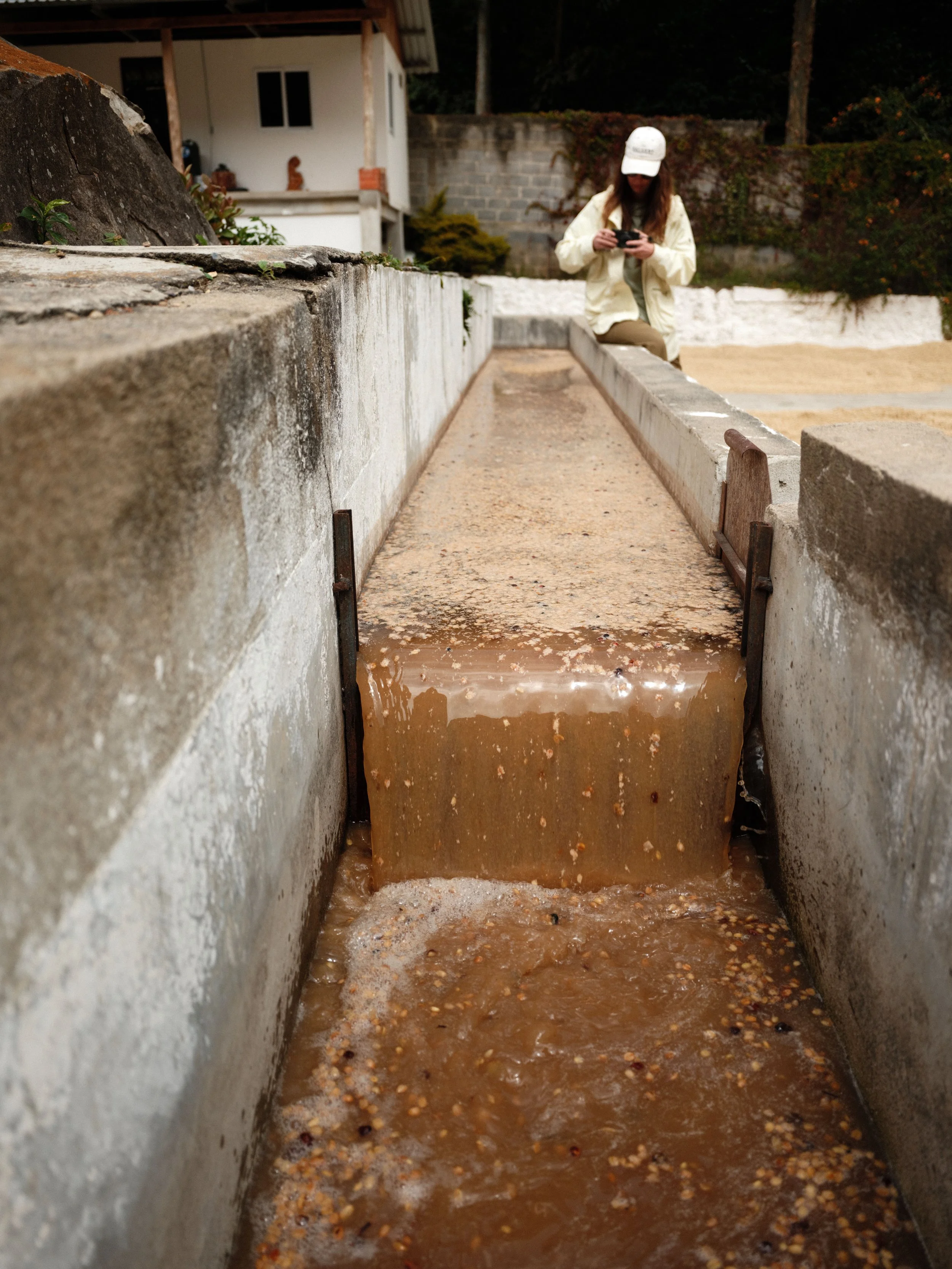
Next up is the milling stage. Water channels guide the dense cherries into a wet mill, where the outer fruit is removed, leaving behind the seed (coffee bean) coated in sticky mucilage.
The beans then rest in cement tanks, preparing for the final step.
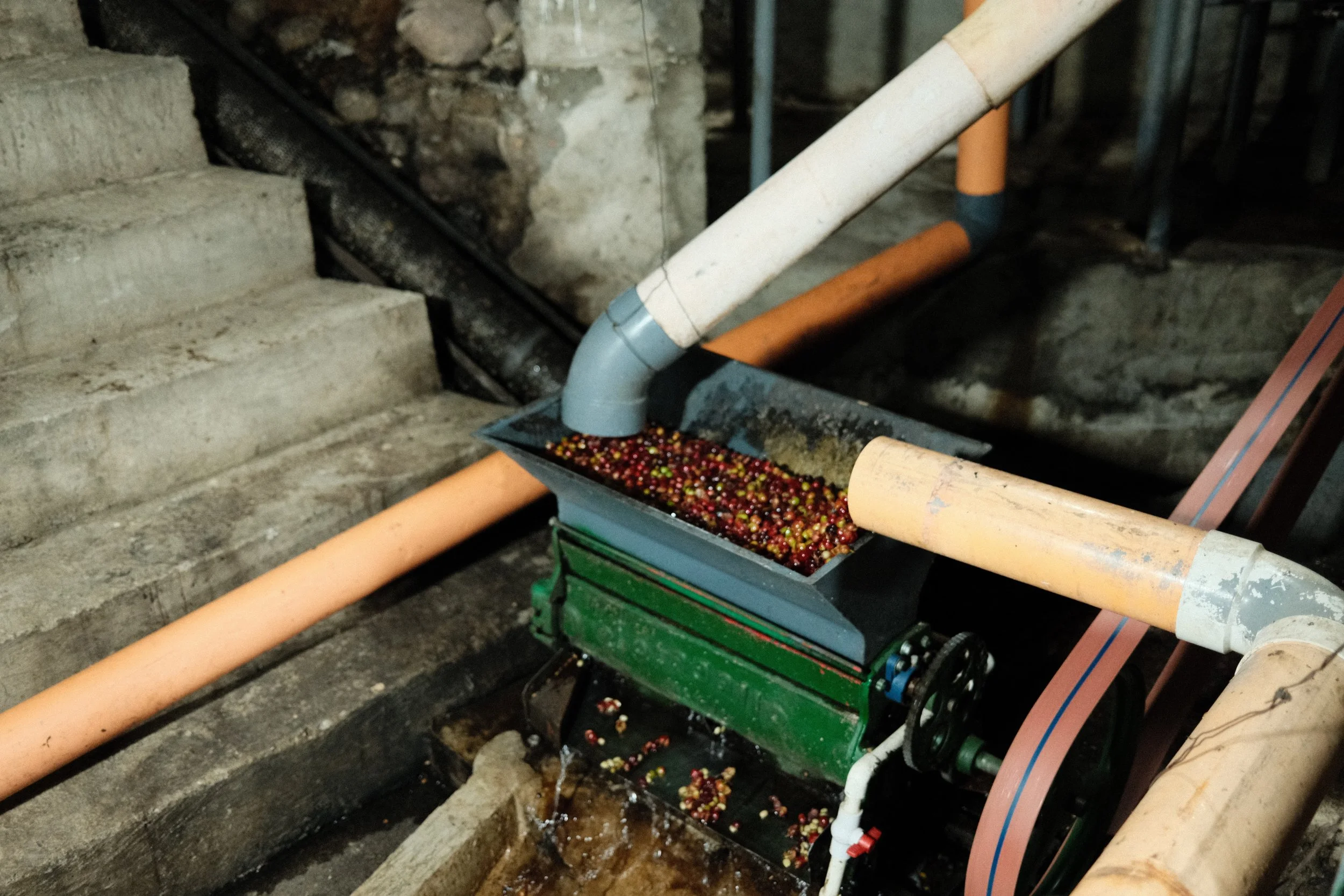
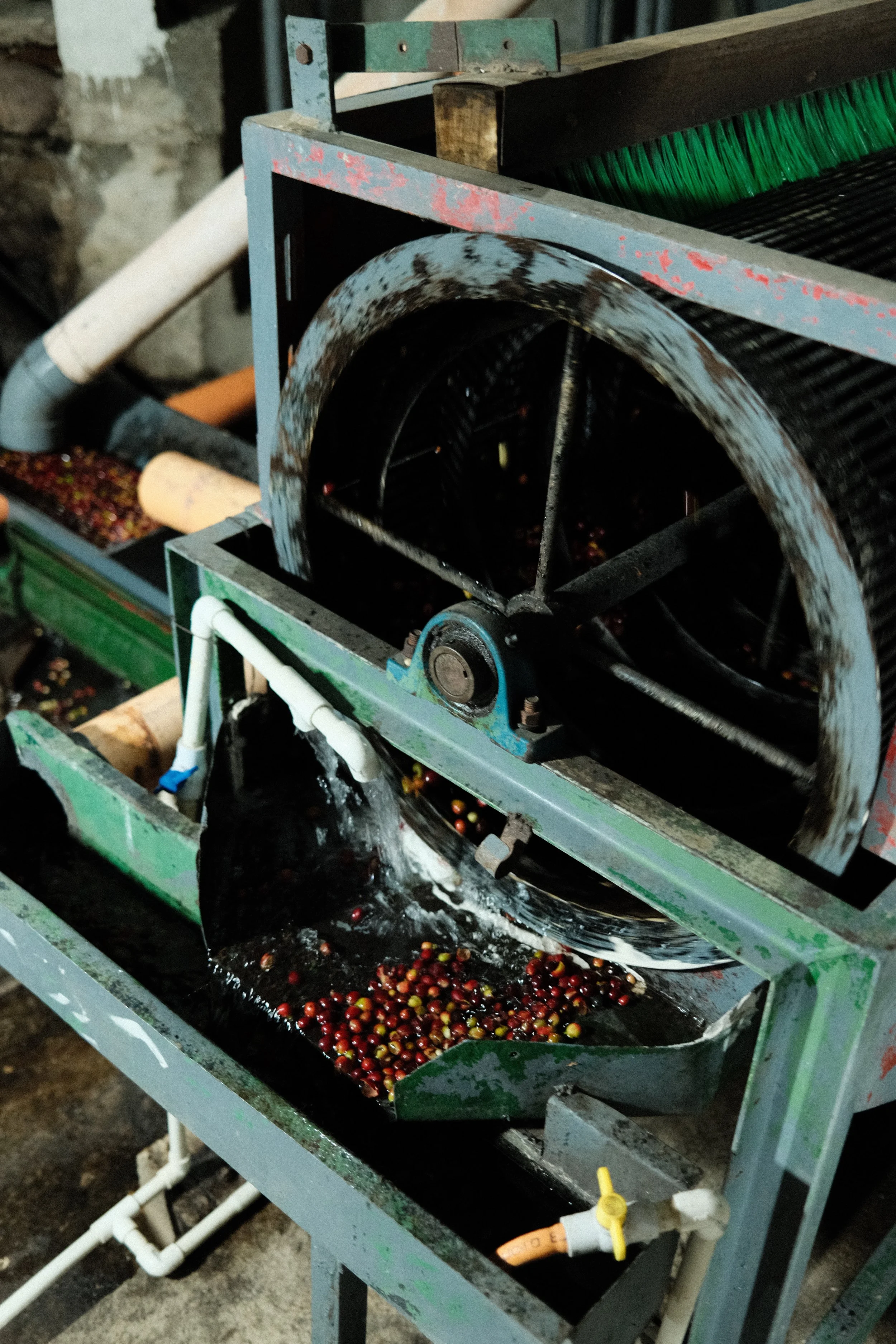
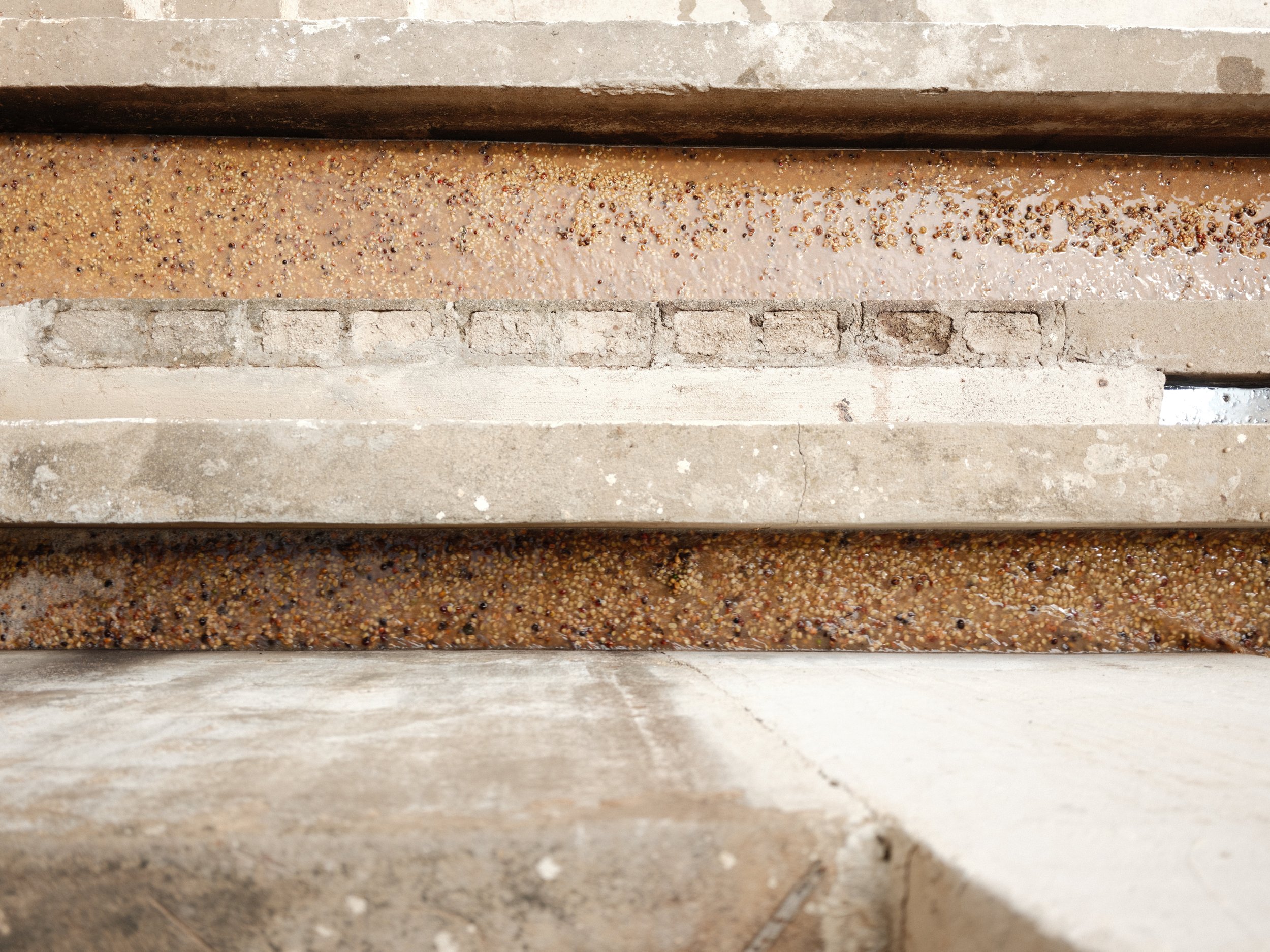
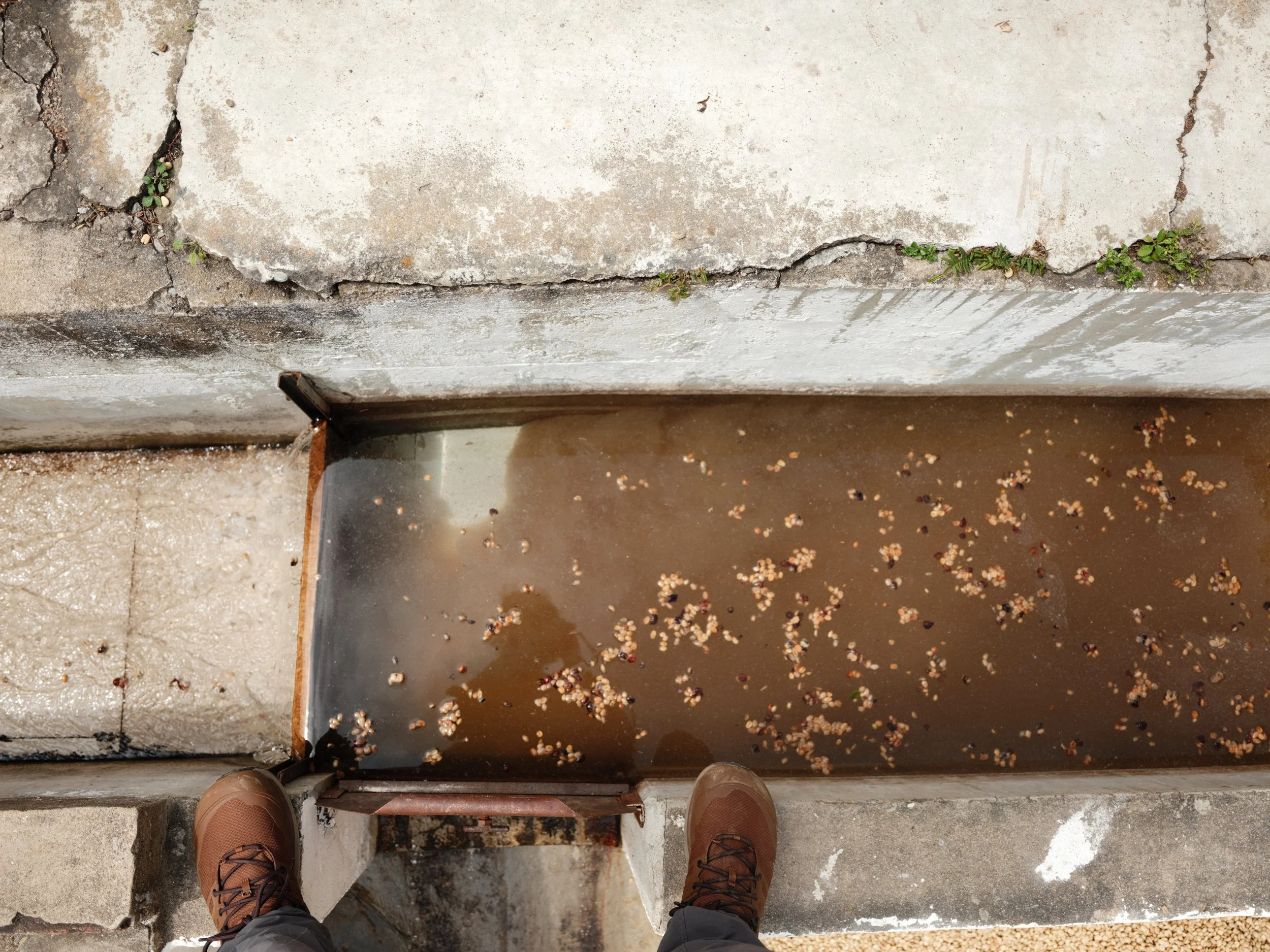
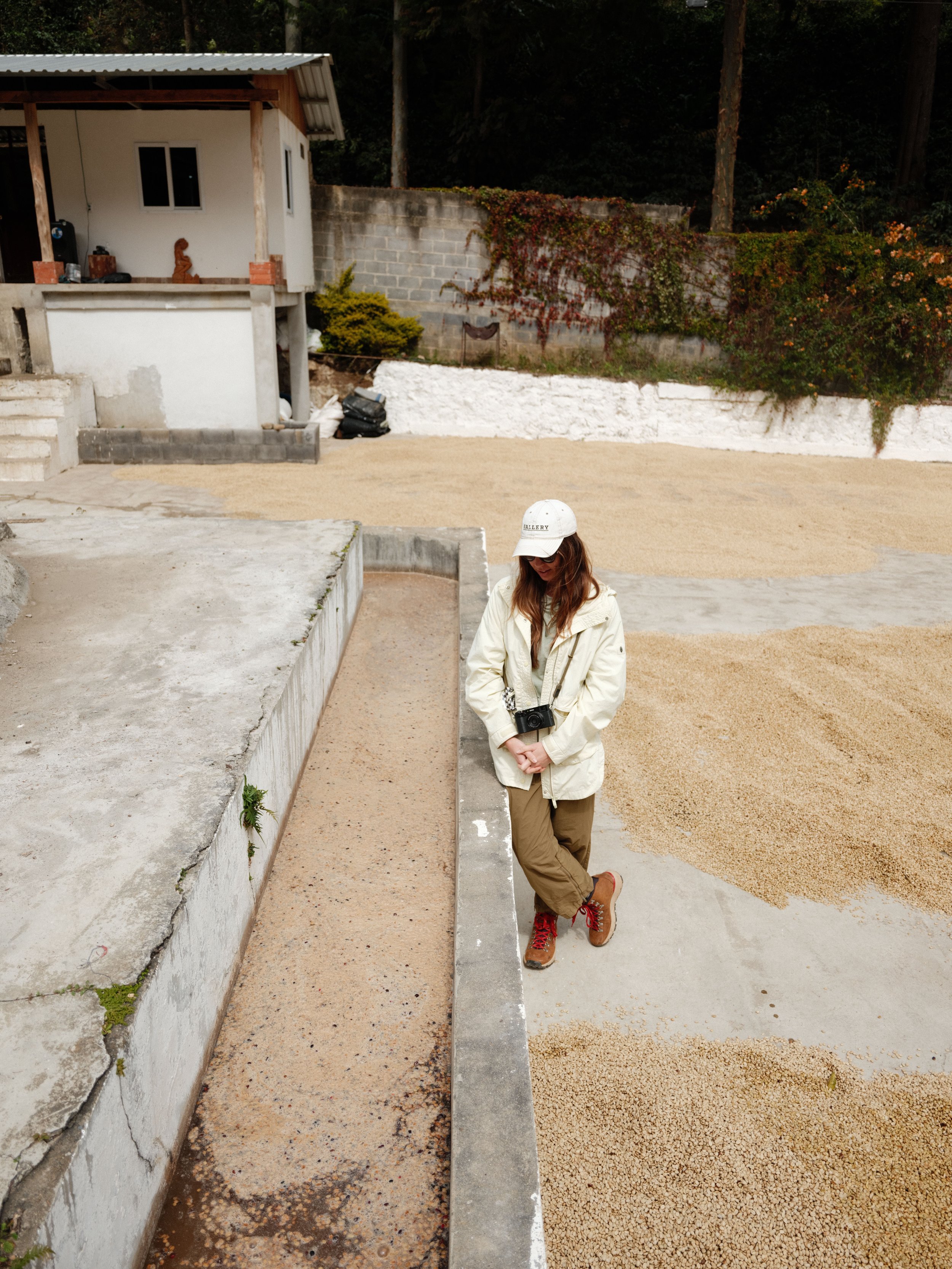
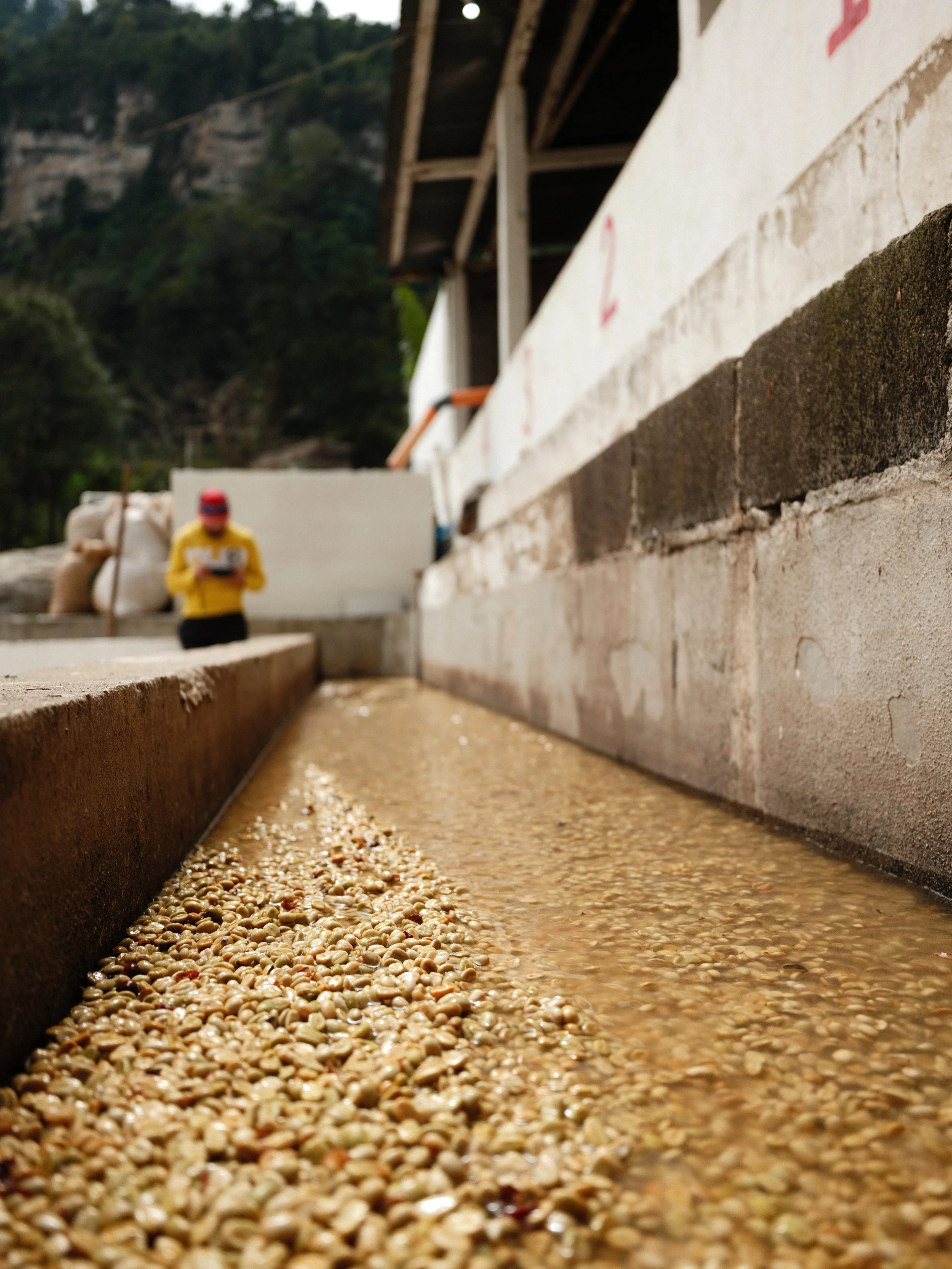
Lastly, the beans are washed. Fresh water fills the tanks and moves the beans through long channels — resembling a small aqueduct system. As they travel, they’re stirred and agitated with paddles to loosen and remove any remaining mucilage or pulp. This continues until the water runs clear, leaving behind clean, smooth beans ready for drying.
COFFEE PROCESSING: DRYING COFFEE
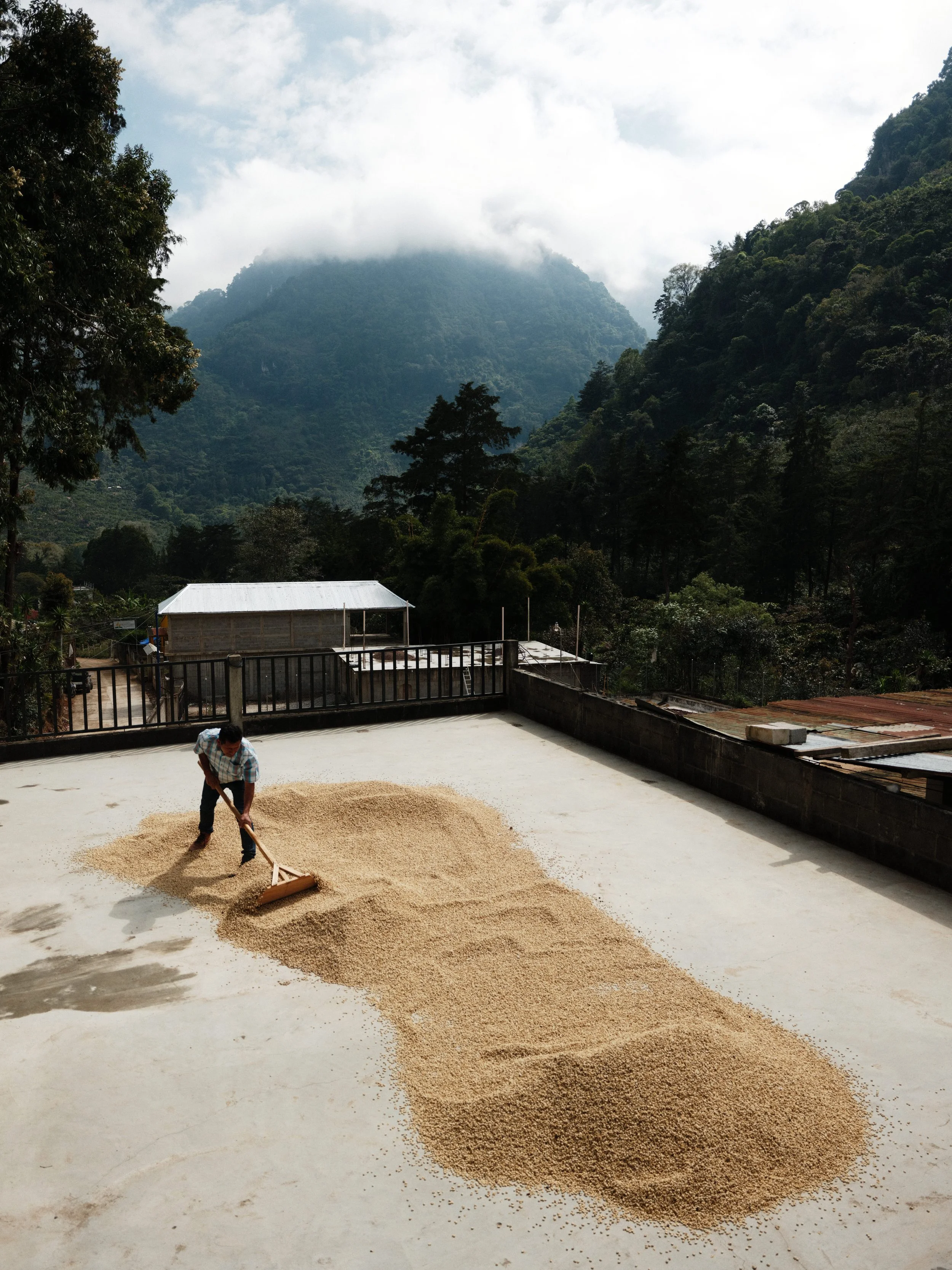
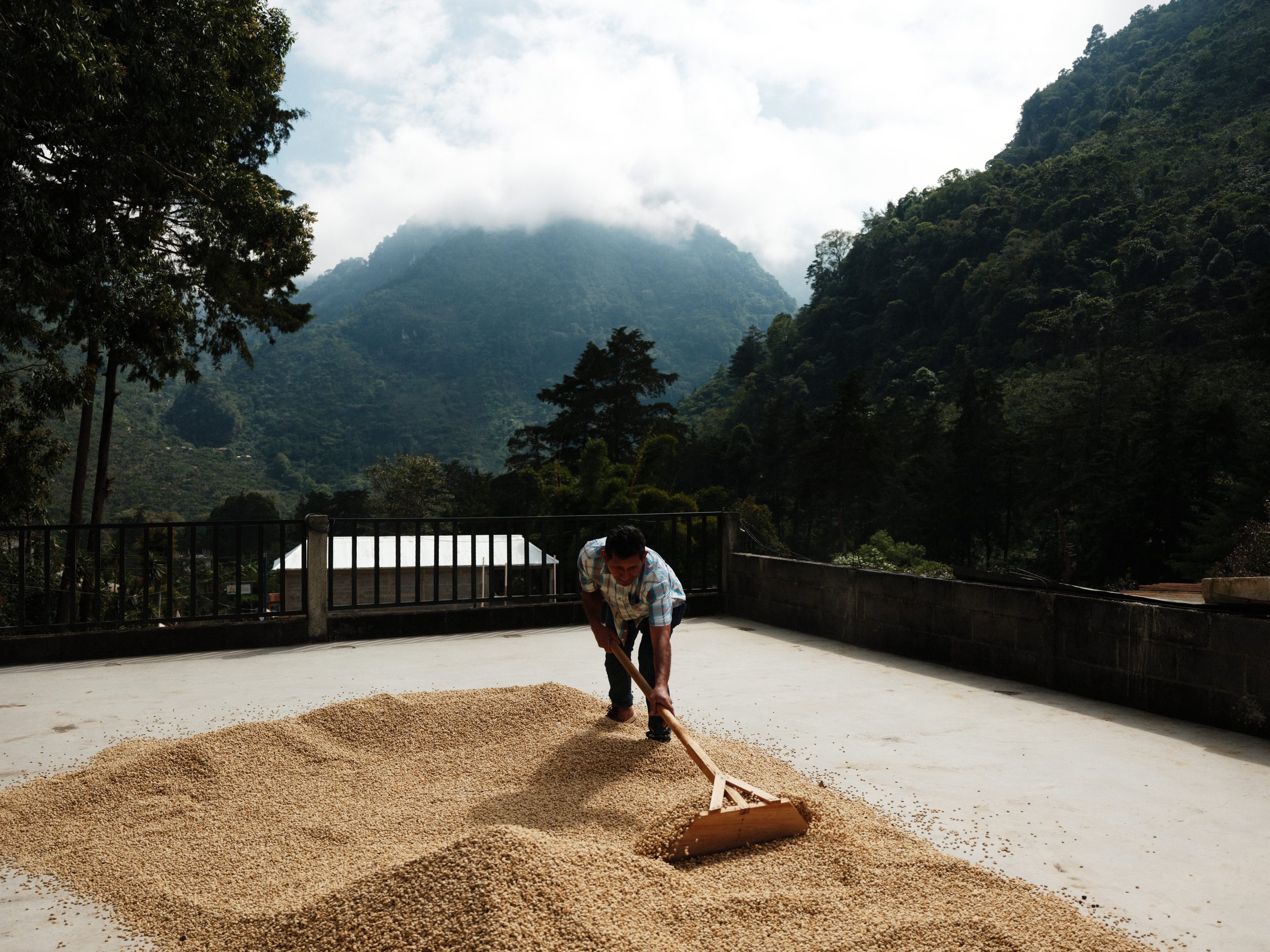
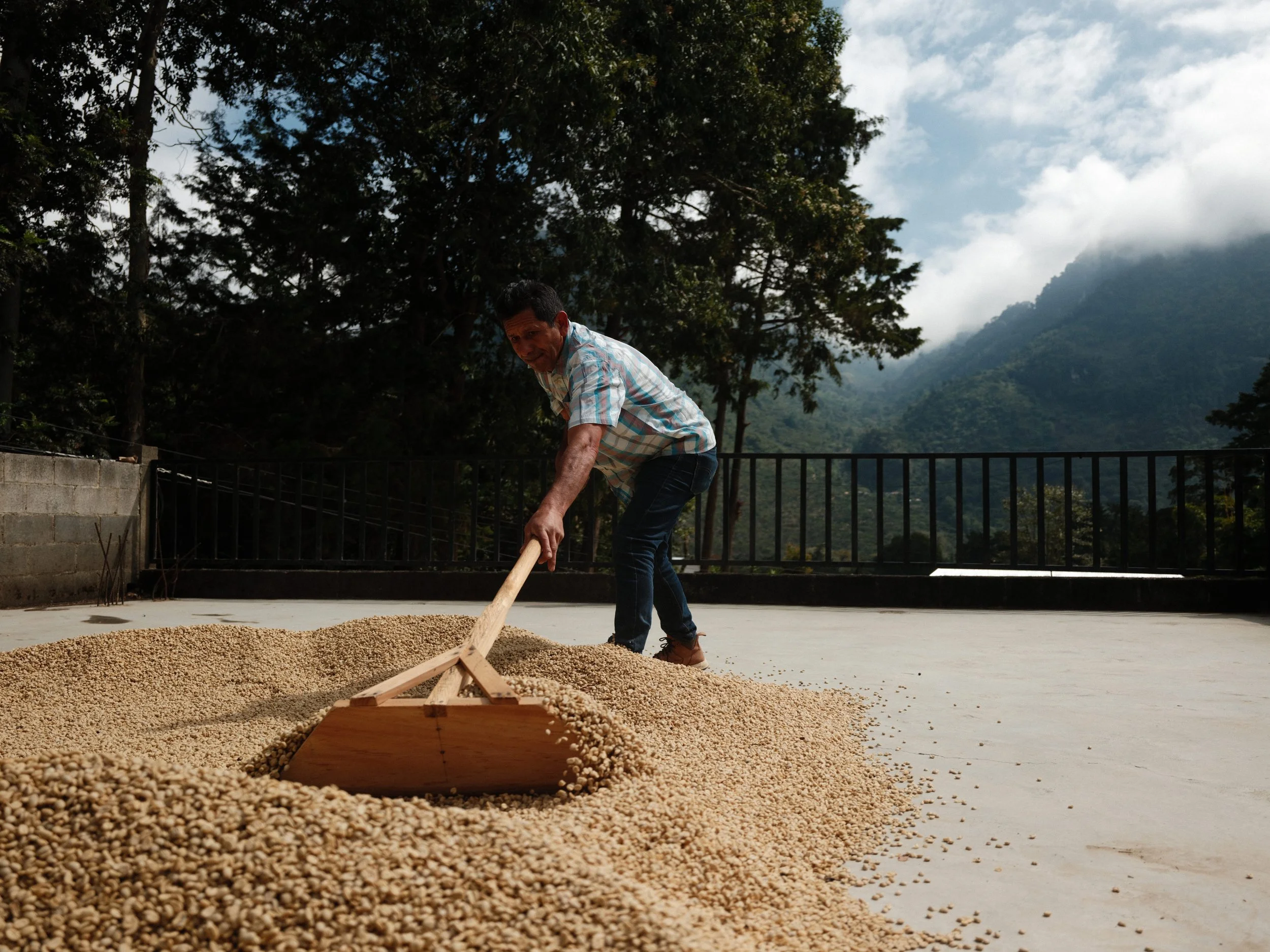
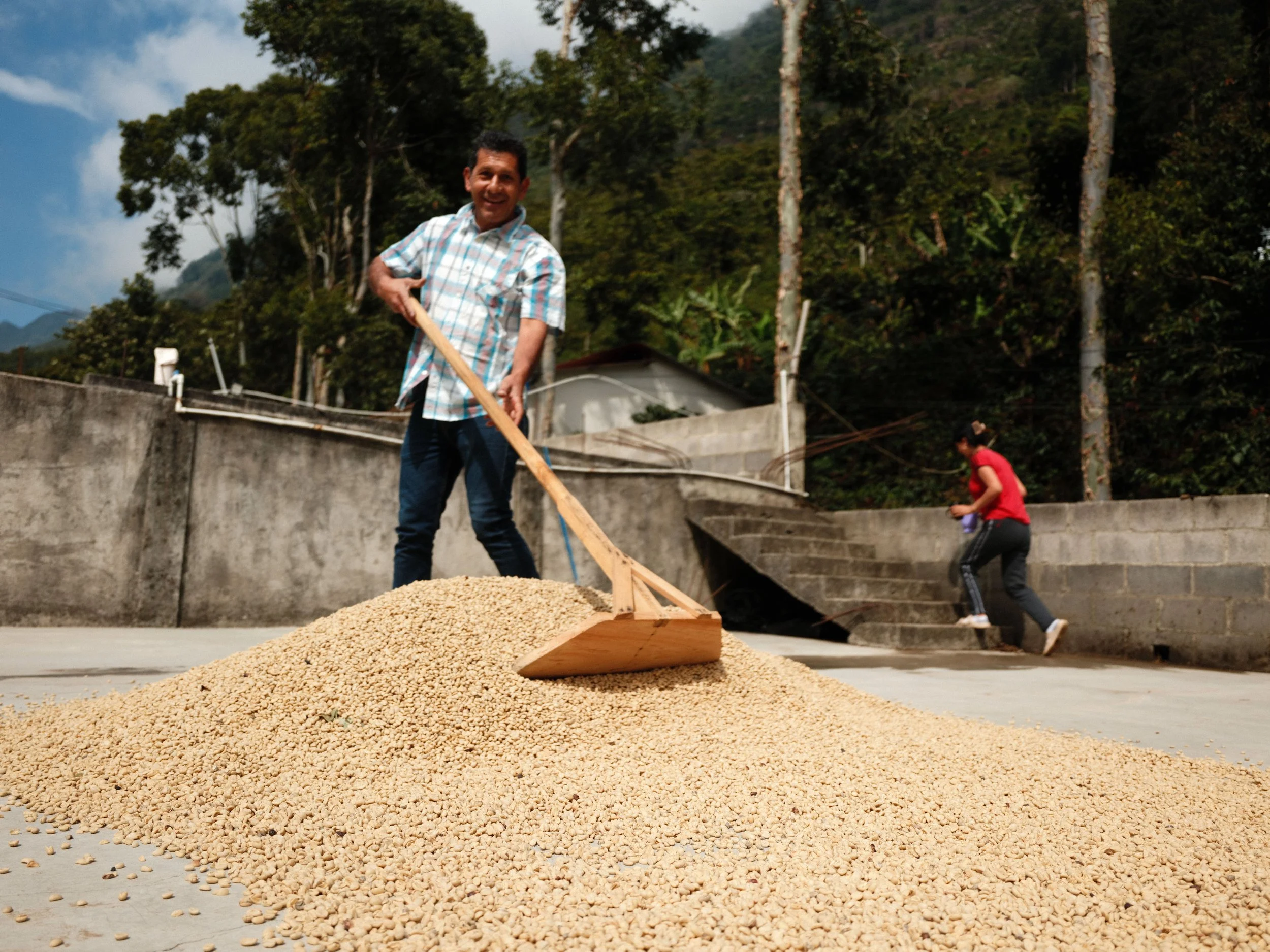
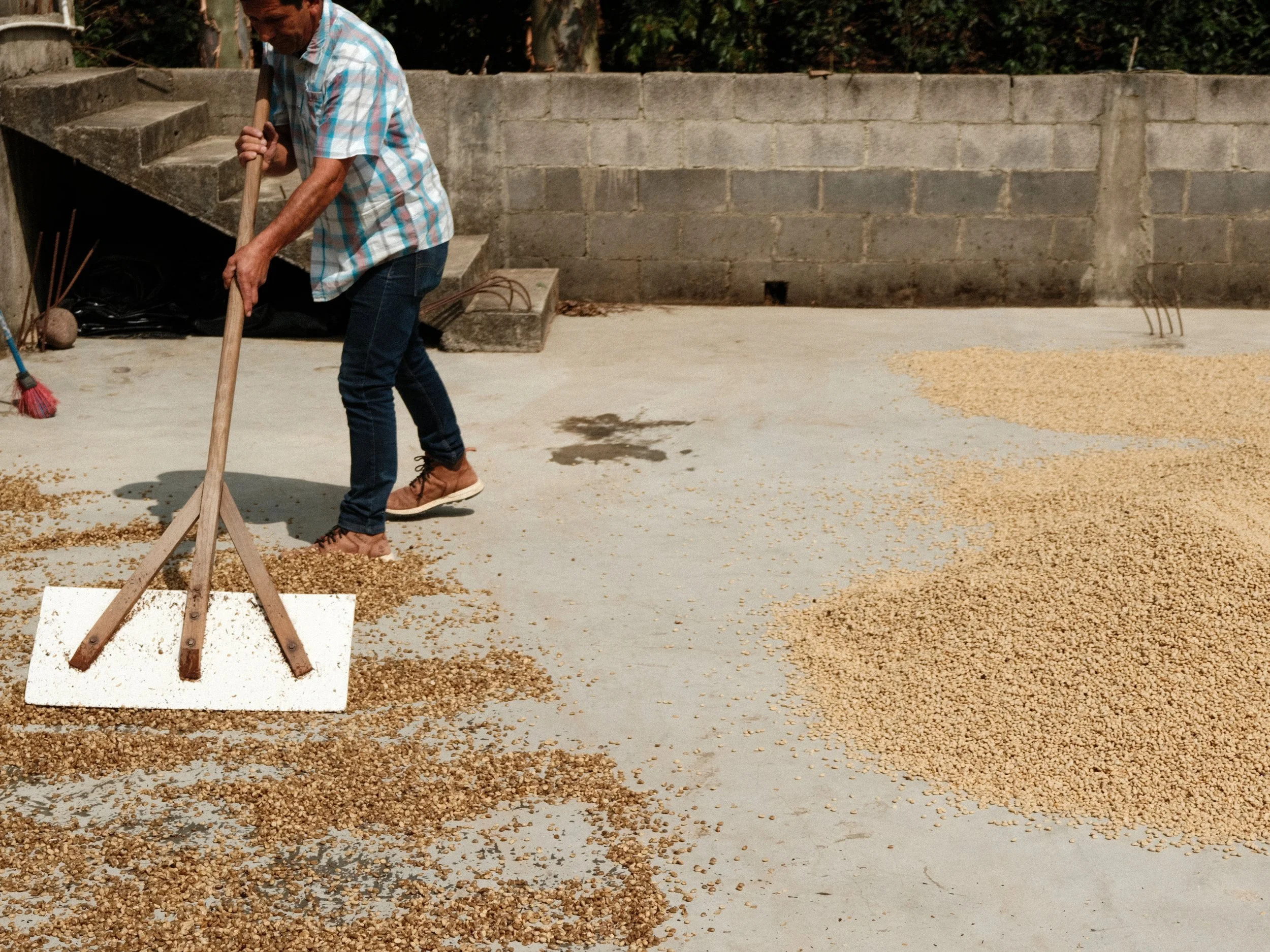
Though the greenhouse offers an ideal environment for drying coffee, not all of the coffee produced at Punta Del Cerro can fit on the drying beds. In fact, washed coffee is perfectly content to dry outdoors – if treated properly, of course.
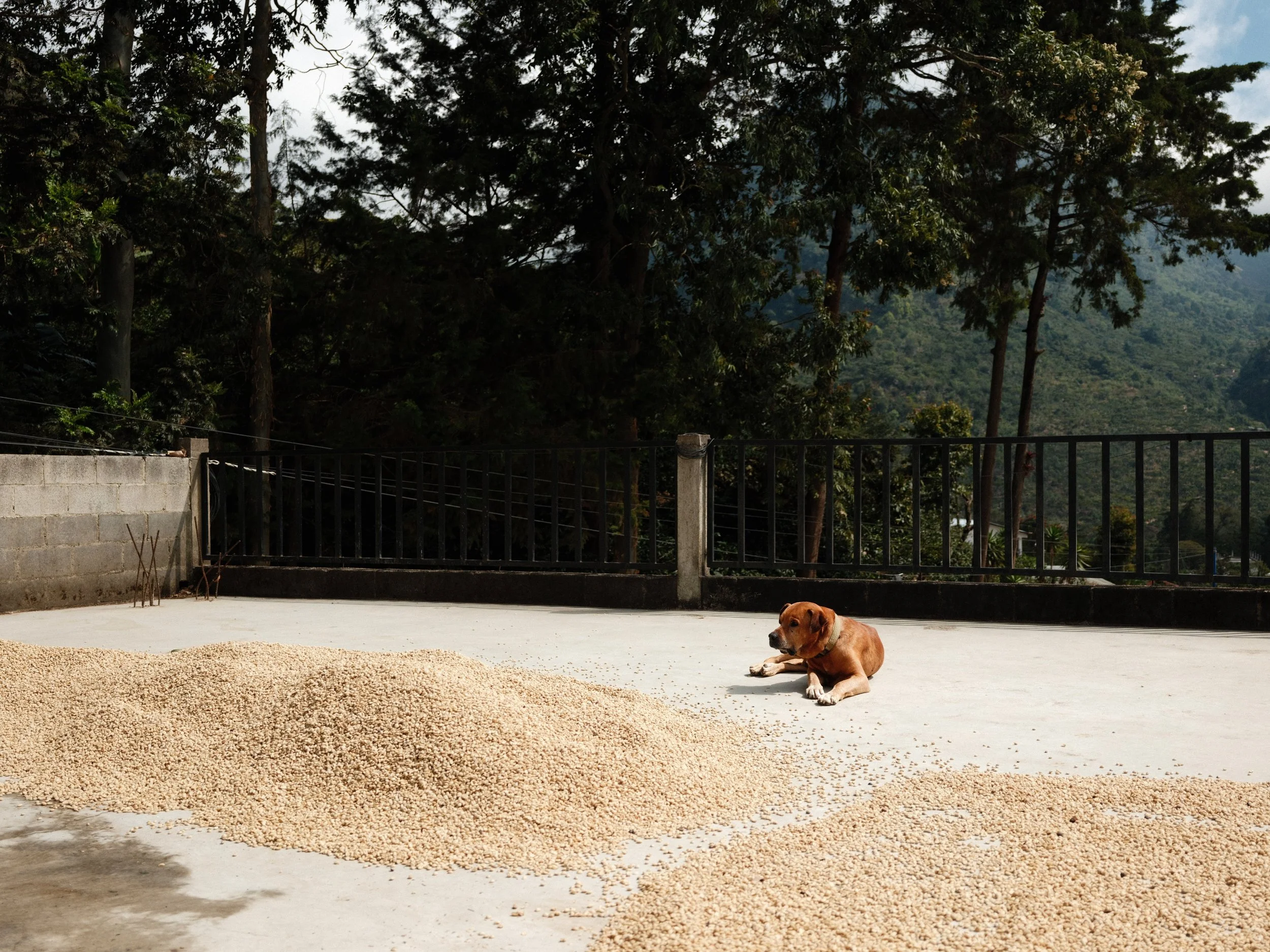
All over Huehuetenango, you’ll notice coffee drying: on driveways, sidewalks, rooftops, and front porches. Through cities, small downs, and even along the interstate, families and local businesses lie their washed coffee out to dry on cement slabs in the sun.
At Punta Del Cerro, it was no different.
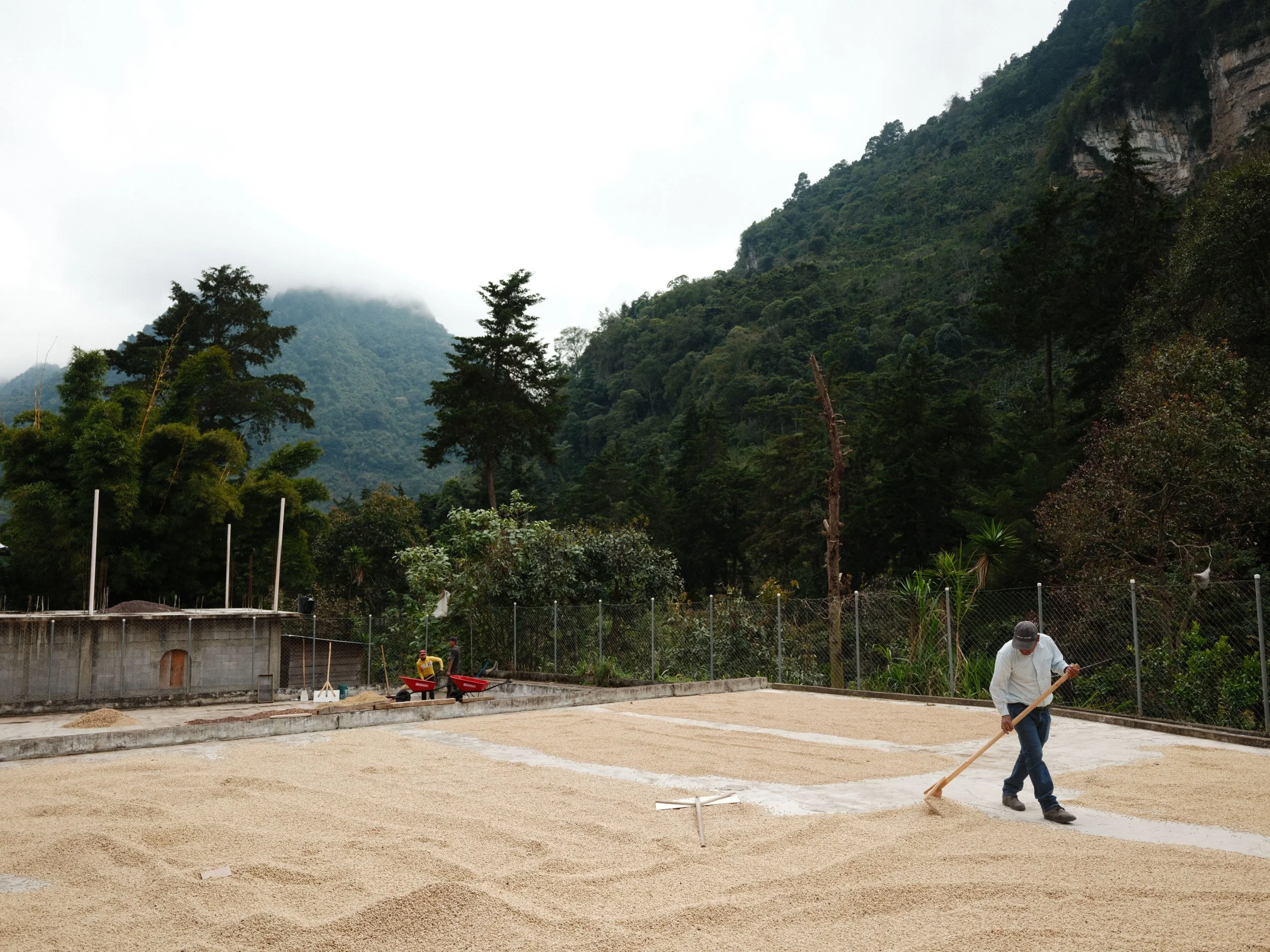
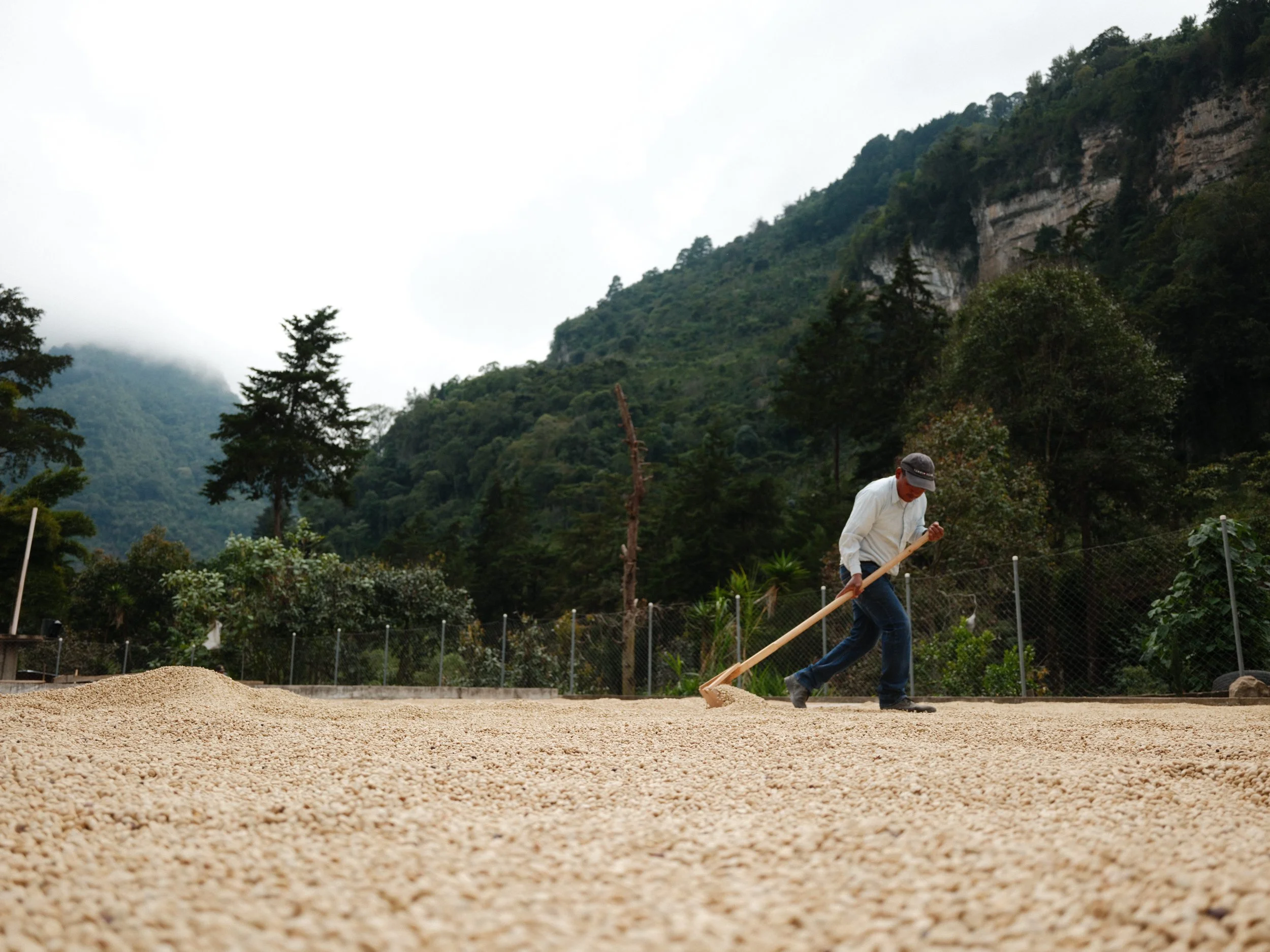
The farm was designed to hold an immense amount of dried coffee. Every space, from the concrete, multilevel rooftops; to expansive courtyards and spacious driveways was meticulously planned for drying coffee during peak harvest.
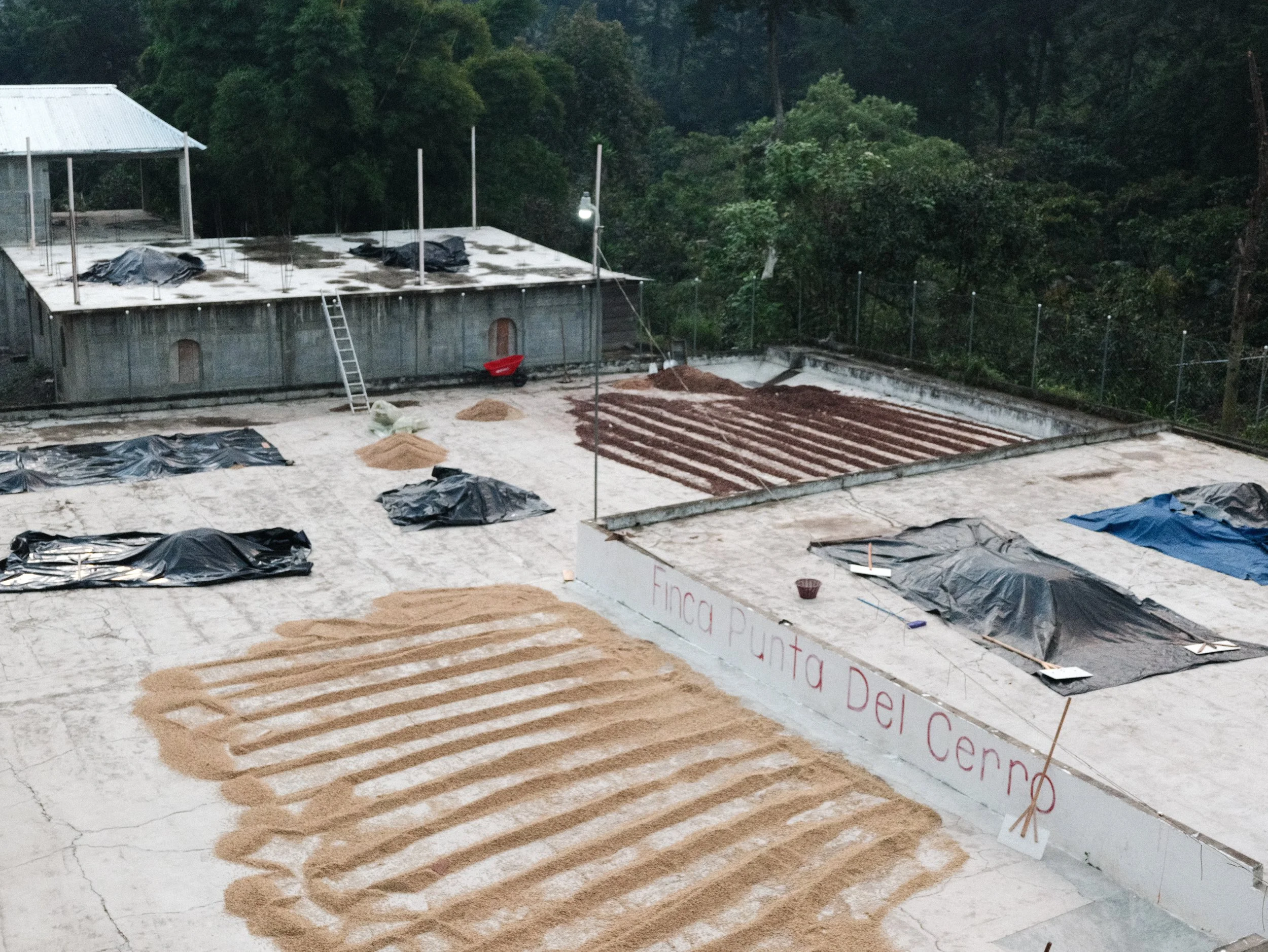
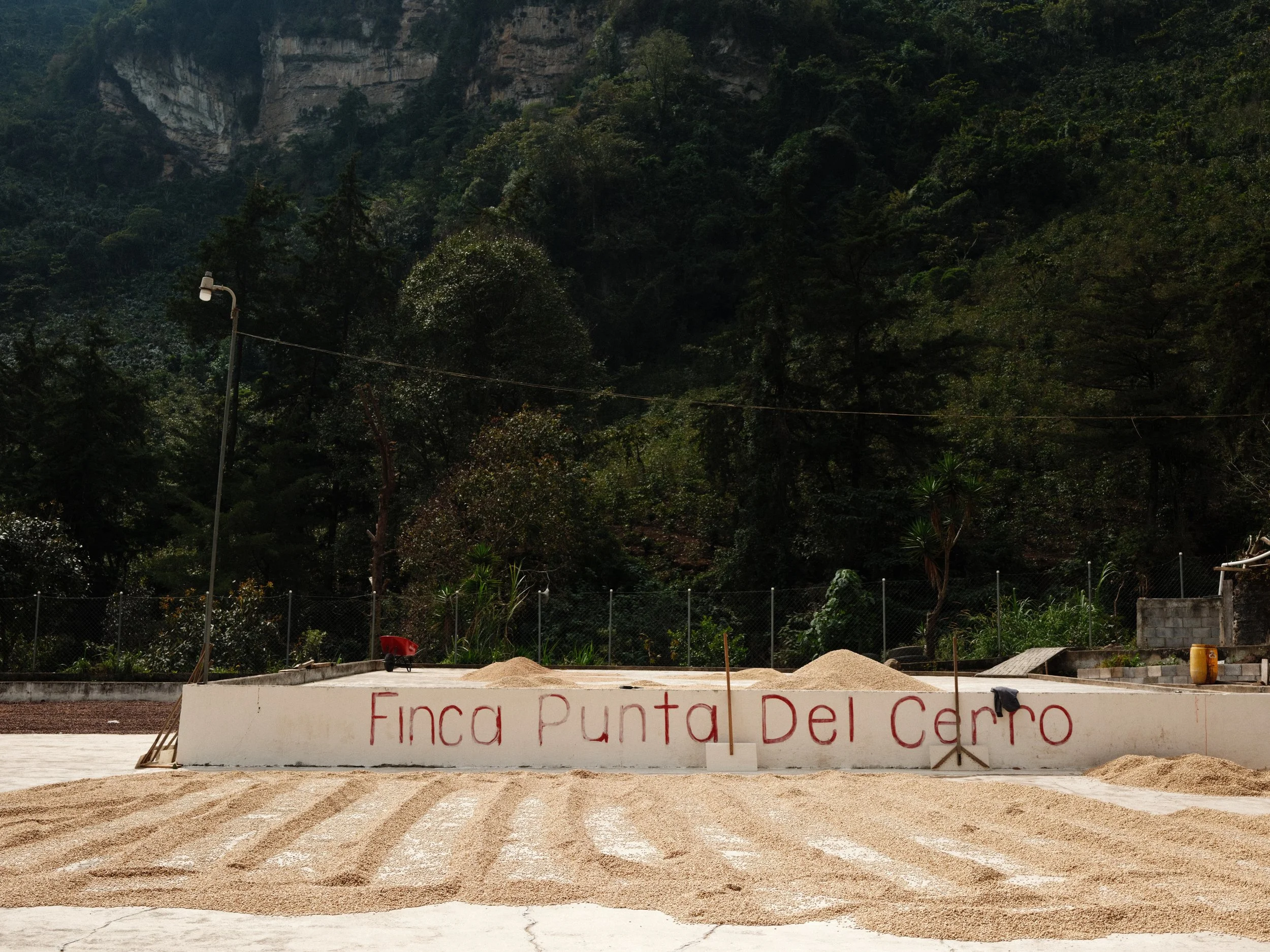
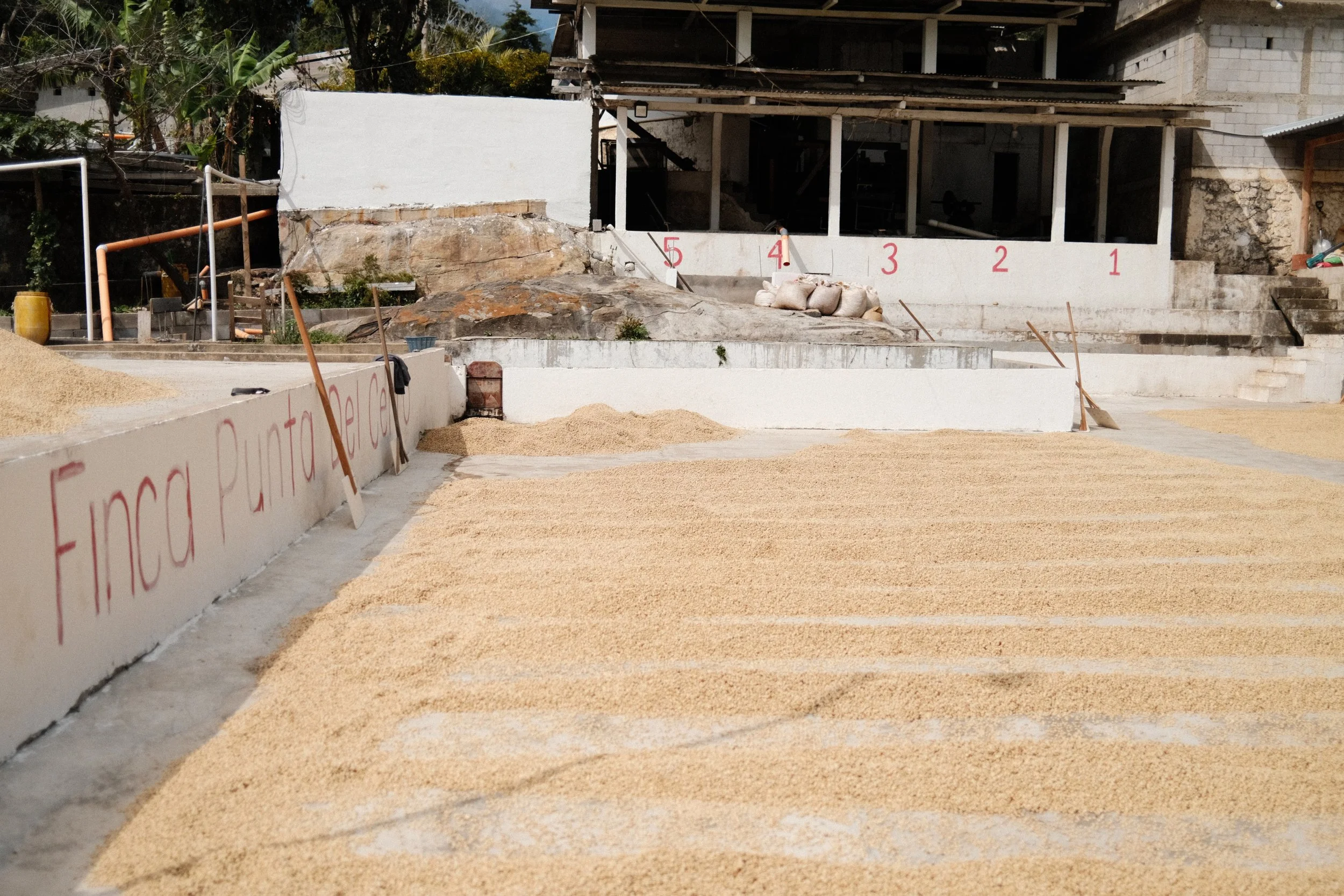
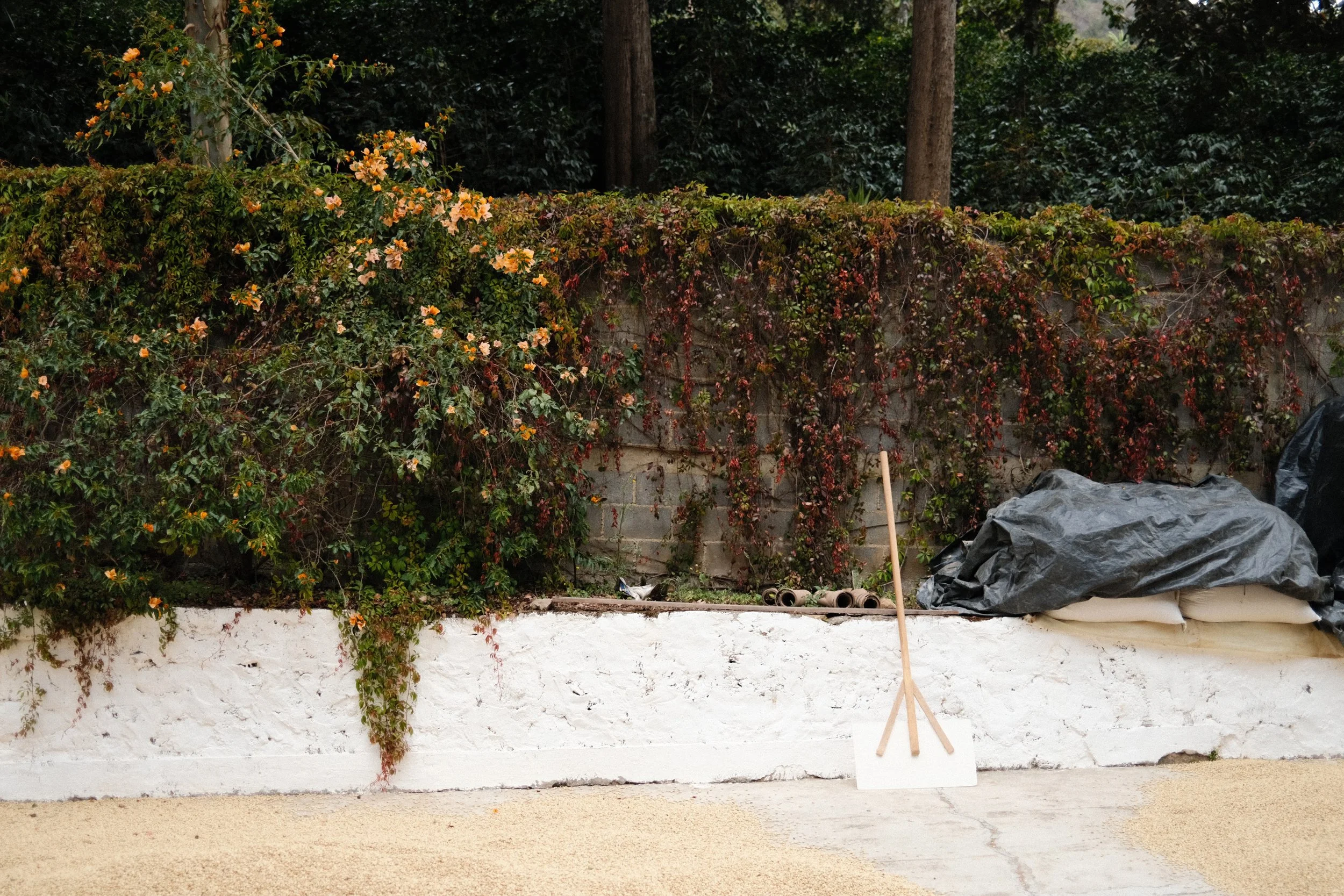
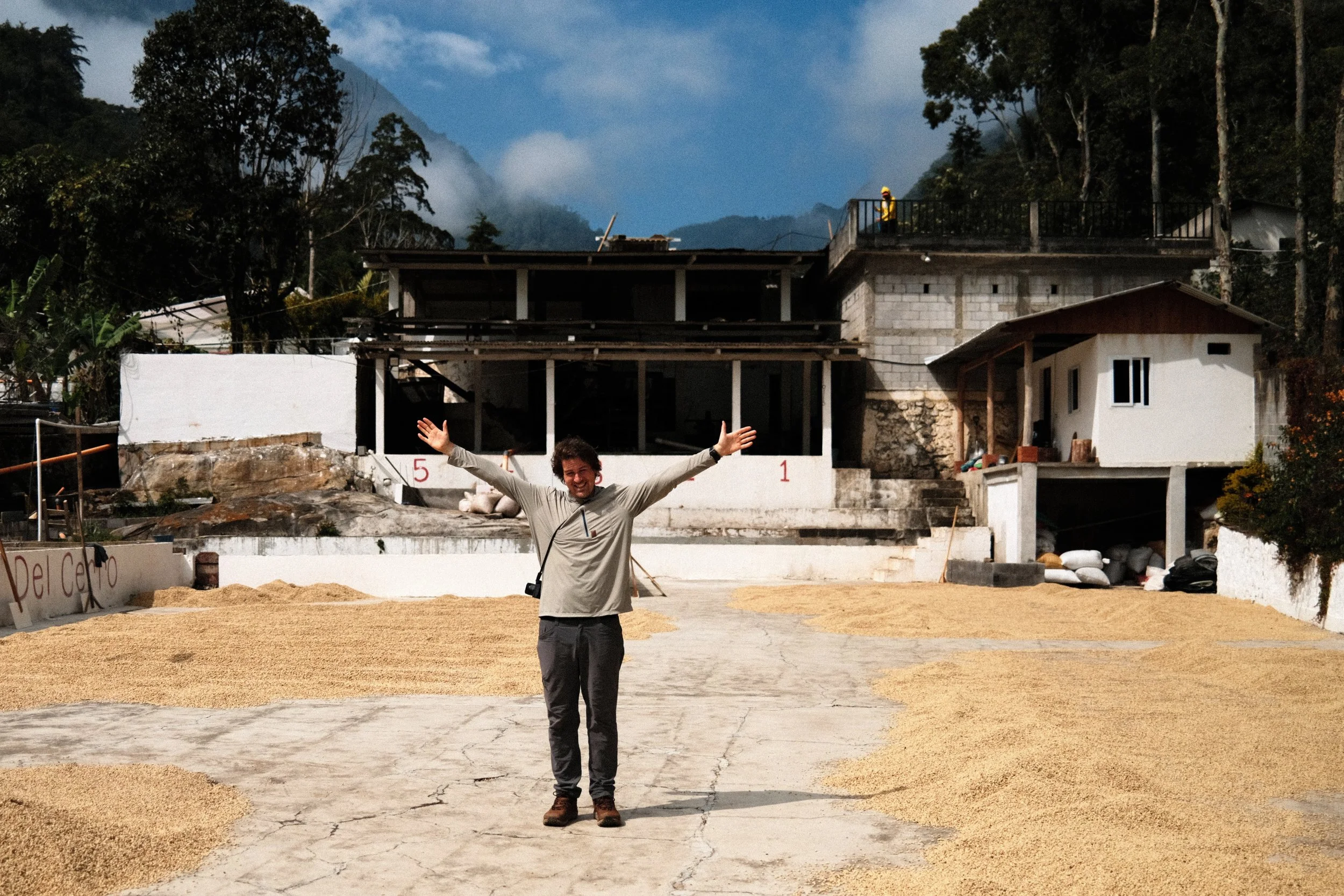
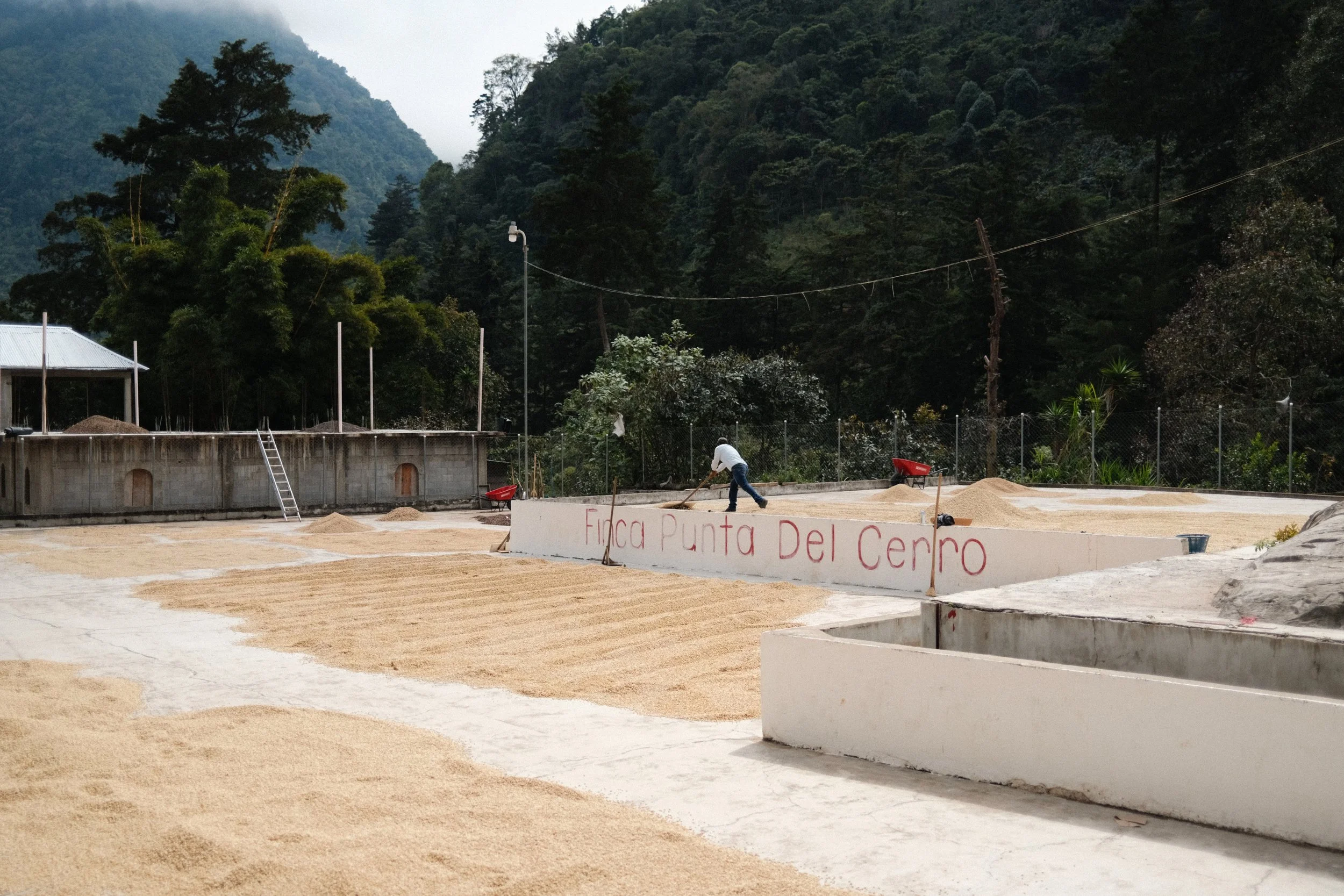
As with everything else on the farm, drying coffee is an art form. Careful planning takes place to ensure batches are rotated, covered, divided, and bagged at just the right time.
If there was a schedule written somewhere, we didn’t see it. Processing coffee is an insanely intricate process, yet we didn’t once notice a single clip board, notepad, whiteboard, or tablet documenting anything. The most we saw was a scrap of cardboard on a drying bed in the greenhouse labeled “N-3” for ‘natural process - batch three.’ Every section of drying coffee outdoors had some unwritten schedule that workers seemed to simply understand – and strictly adhere to. It was incredible.
GUATEMALA: THE FINAL CHAPTER COMING
It was a privilege to spend so much time with the Villatoro family at their home in Punta Del Cerro. Their generosity was unmatched and every member of the family welcomed us with open arms – literally. We shared so much laughter and (endless) cups of coffee not pictured above, but we hope that our immense joy and unwavering gratitude came through all the same. Trip of a lifetime.
See you at our final farm stop in Hoja Blanca next week, where we’ll wrap the last installment of our three-part blog series with the Villatoros in Guatemala 👋